XRP Ledger (XRPL) is a public blockchain network that supports XRP transfers, digital asset issuance, and decentralized trading. It currently primarily uses digital signature algorithms such as secp256k1 and Ed25519 to verify transaction authorization.
2026-11-12 10:22:33
Proof of Prompt fits when you need prompt–response integrity without revealing private system prompts. Proof of Inference fits when the inference process itself must be proved. ZKML fits when model computation must be proved end-to-end—usually at much higher proving cost than POP-style designs.
2026-11-12 03:20:26
Universal Accounts (Universal Account) is a chain-abstraction account infrastructure developed by Particle Network. It enables users to manage and use assets distributed across different blockchains through a unified account and complete cross-chain transactions in supported applications. By combining smart accounts, cross-chain message coordination, liquidity orchestration, and gas abstraction, it integrates the multichain operations that users would otherwise need to perform separately into a more unified interaction flow.
2026-11-11 10:27:41
Particle Network is a Web3 infrastructure project centered on Chain Abstraction. It aims to simplify the management of assets and execution of transactions across different blockchains through technologies such as unified accounts, cross-chain liquidity coordination, and gas abstraction. Its core approach is not to eliminate the differences between blockchains, but to integrate operations such as network selection, asset allocation, and transaction execution into a unified user experience as much as possible.
2026-11-11 10:27:04
ePBS (EIP-7732) is Enshrined Proposer-Builder Separation: Ethereum’s protocol-level hand-off where a staked builder commits to an execution payload, the proposer includes that bid in the beacon block, and a Payload Timeliness Committee checks timely reveal—reducing reliance on trusted relays for the core exchange.
2026-11-10 08:11:14
Impossible Cloud Network (ICNT) enables decentralized cloud resource scheduling by connecting storage and computing resources from distributed nodes to a unified protocol network. After a user submits a resource request, the protocol automatically matches resources based on resource type, node status, and service requirements. It then uses a token mechanism to handle fee settlement and node incentives, creating an open cloud resource marketplace.
2026-11-10 08:11:07
On February 28, 2026, Ethereum founder Vitalik Buterin explored the Ethereum scaling roadmap, outlining a two-stage strategy: short-term efficiency optimization followed by a long-term transition to ZK-EVM verification. He examined the potential implications of these initiatives for Ethereum’s performance and the structural composition of ETH pricing.
2026-11-10 08:10:58
Nonce stands for "Number used once," and is a cornerstone of modern cryptography and blockchain technology. Whether securing online payments via SSL/TLS protocols or enabling Bitcoin's Proof-of-Work mining mechanism, the nonce is vital for maintaining communication uniqueness and preventing malicious replay attacks. This guide offers an in-depth exploration of how nonces function and why they are indispensable to digital security.
2026-11-10 08:10:28
The article offers an in-depth evaluation of these technologies across four key dimensions: innovation, market attention, capital investment, and application maturity. It further supports its analysis with concrete examples and data, highlighting trends like the rapid expansion of the AI agent market and the commercial deployment within the future mobility industry.
2026-11-10 08:09:42
The article provides a detailed analysis of the technical characteristics of Cosmos, including how it supports the customized needs of sovereign blockchains and compares it with other technological routes such as mBridge.
2026-11-10 08:06:39
The article explores how Aztec uses zero-knowledge proof technology to achieve privacy protection, analyzing a new approach for balancing privacy and transparency in blockchain technology.
2026-11-10 08:06:20
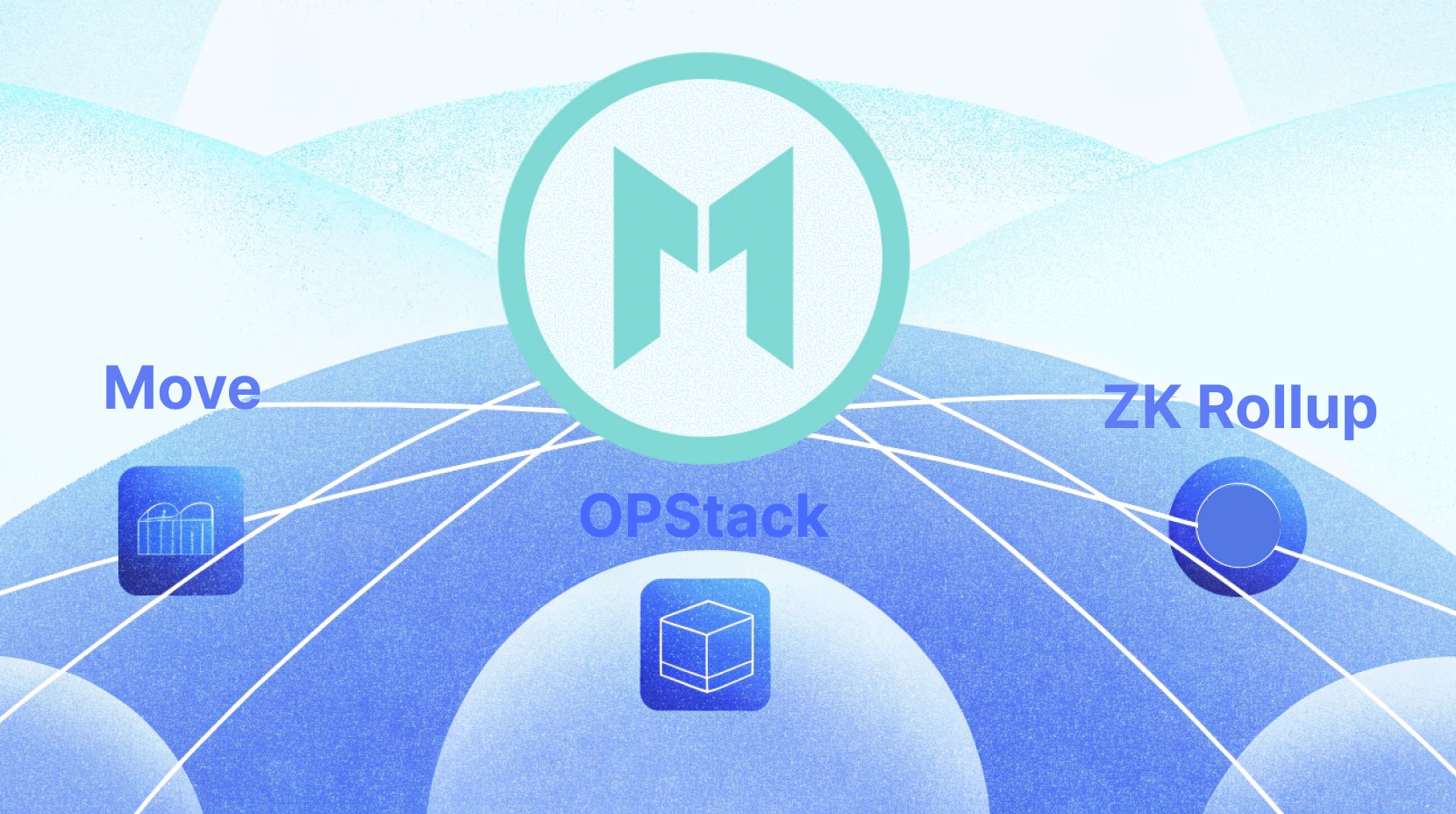
As the first public chain infrastructure that supports Multi-VM architecture, Mango Network breaks the liquidity fragmentation problem between different blockchain networks by integrating cutting-edge technologies such as Move, OPStack, and ZK Rollup.
2026-11-10 08:06:18
As the cryptocurrency industry transitions from financial speculation to real consumer scenarios, consumer-grade public chains have become a new trend in industry development. Through technological innovation (hybrid Rollup), strategic positioning (focus on consumer scenarios), and resource integration (cooperation with Bitget), Morph is becoming an important entry point for on-chain living infrastructure.
2026-11-10 08:06:10
Gate Institute (2025.3.7-2025.3.13), on March 7, Safe{Wallet} collaborated with Mandiant, a cybersecurity company under Google Cloud, to investigate the Bybit security incident, confirming its connection to North Korean hacker TraderTraitor. On March 11, the Movement Foundation announced that REX-Osprey™ had submitted an application for the MOVE ETF. On March 12, Solana's SIMD-228 upgrade proposal was approved. On March 13, the terms related to blockchain in the U.S. Securities and Exchange Commission (SEC) filings reached a historical high in February. Virtuals Protocol announced the launch of the multi-agent framework ACP.
2026-11-10 08:03:19
Explore how multidimensional EIP-1559 optimizes Ethereum's gas efficiency by separating resource costs, enhancing scalability, and improving network utilization.
2026-11-10 08:02:26