ni hao cat (MIHAO) is a meme coin centered on a cat-themed identity. Its market positioning is closely tied to internet culture, visual symbols, and community-driven dissemination. Understanding this type of asset requires looking beyond token prices and short-term popularity to how memes spread, how communities build shared identity, and whether attention can continue to translate into market participation.
2026-11-13 10:21:22
ERC7683 aims to optimize the user experience for solution users, lower the barriers to entry for a universal solution network, and the design goal of this standard is to enhance the solver user experience, making it easier for them to support multiple settlement networks, and to deterministically calculate their rewards.
2026-11-13 09:21:05
Evmos is a new frontier in blockchain technology that seeks to integrate Ethereum assets and applications with the Cosmos ecosystem's interconnected blockchain.
2026-11-13 08:59:47
This article introduces a lending rate Morpho project, a lending rate optimizer, including its main businesses, team, investors, tokens, etc. It also explains the need for matching optimization between borrowers and lenders in terms of the current lending protocols and its interest rate inefficiency.
2026-11-13 08:45:09
ETH burning is the process by which Ethereum permanently removes a portion of network transaction fees from the circulating supply through the EIP-1559 mechanism. Since the London Upgrade introduced fee burning in 2021, changes in ETH supply have depended not only on the amount of new issuance but also on network activity, gas fees, and demand for block space. After Ethereum transitioned from proof-of-work (PoW) to proof-of-stake (PoS) in 2022, new ETH issuance declined significantly, and the market began to view ETH's potential deflationary properties as an important feature of its tokenomics.
2026-11-12 10:40:25
Harmony (ONE) was an early Layer-1 public blockchain to explore State Sharding and Effective Proof-of-Stake (EPoS) consensus in the field of blockchain scalability. Following multiple rounds of ecosystem evolution and a strategic adjustment to its network architecture in 2026, Harmony gradually phased out its original mainnet and migrated the ONE token to Ethereum’s ERC-20 standard, restructuring itself from an independent heterogeneous public blockchain toward a mature ecosystem and frontier computing.
2026-11-12 10:15:33
A Spot Bitcoin ETF is an exchange-traded fund that uses Bitcoin as its underlying asset and provides investors with exposure to the price of BTC through a securities exchange. Investors can participate in the Bitcoin market through a securities account without directly managing a crypto wallet or private keys.
2026-11-10 11:08:14
ePBS (EIP-7732) is Enshrined Proposer-Builder Separation: Ethereum’s protocol-level hand-off where a staked builder commits to an execution payload, the proposer includes that bid in the beacon block, and a Payload Timeliness Committee checks timely reveal—reducing reliance on trusted relays for the core exchange.
2026-11-10 08:11:14
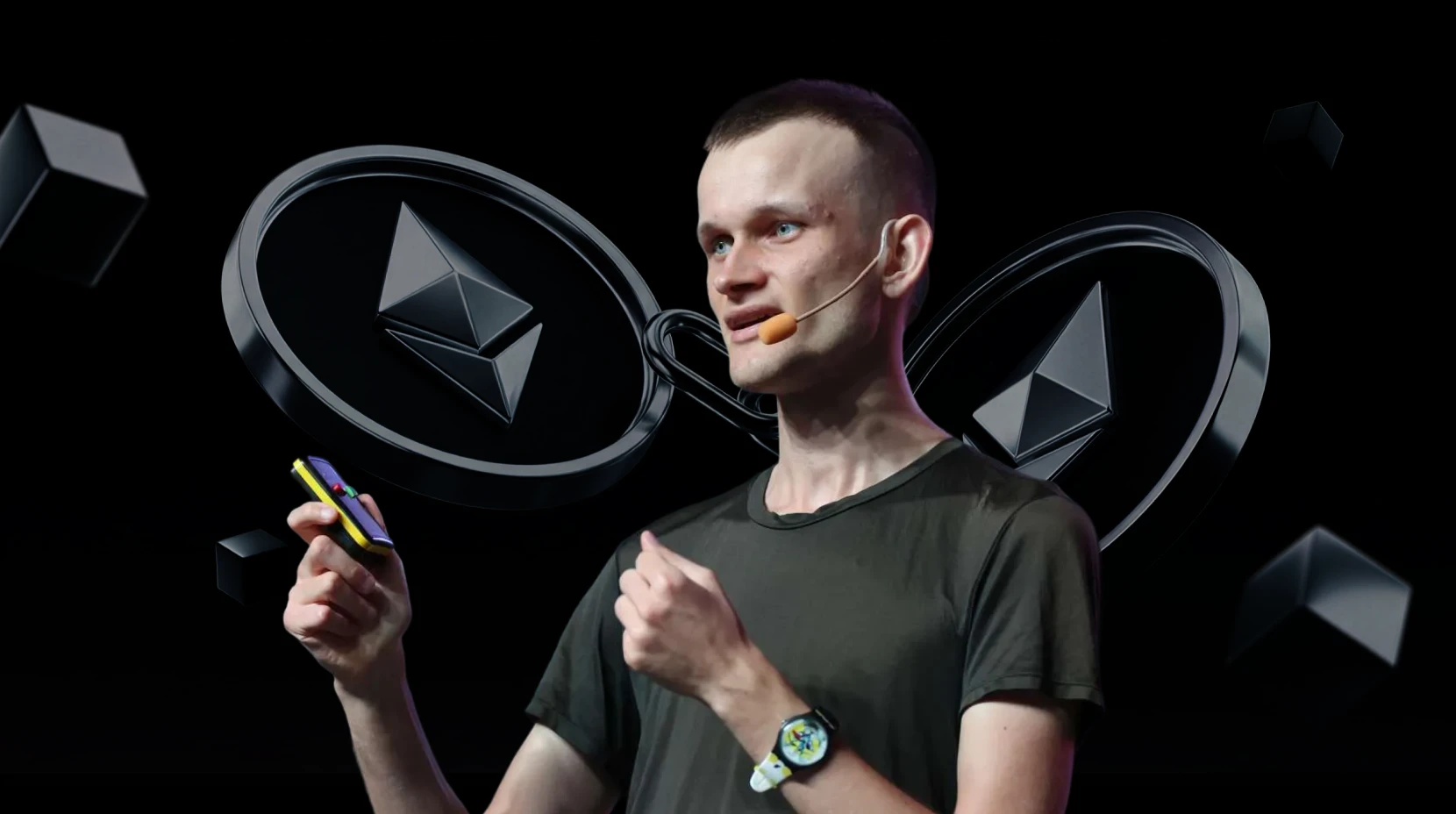
On February 28, 2026, Ethereum founder Vitalik Buterin explored the Ethereum scaling roadmap, outlining a two-stage strategy: short-term efficiency optimization followed by a long-term transition to ZK-EVM verification. He examined the potential implications of these initiatives for Ethereum’s performance and the structural composition of ETH pricing.
2026-11-10 08:10:58
As of February 26, 2026, on-chain data shows that Vitalik has sold 17,196 ETH in total, which has attracted considerable market attention. This article examines his original holdings, current balance, and annual sell-off history to assess the true impact.
2026-11-10 08:10:56
Ethereum Foundation Co-Executive Director Tomasz Stańczak has resigned after just 11 months in office, handing over leadership to a new management team. This article examines his reform efforts and departure statement, explores the structural tension between the Foundation's commitment to decentralization and the need for execution efficiency, and assesses ETH's current predicament as it faces rising competition and anxieties over returns.
2026-11-10 08:10:55
GTETH is a liquid asset model that embeds ETH staking rewards within the asset itself, enabling investors to retain complete liquidity and operational flexibility without sacrificing yield. This ETH asset management solution delivers both returns and strategic adaptability, making it ideal for navigating high-volatility markets.
2026-11-10 08:10:52
In today’s crypto market, where high volatility and swift sector rotation are the norm, traditional ETH staking is exposing its liquidity limitations. GTETH overcomes these challenges with built-in yield and a no-lockup structure, giving ETH both earning potential and mobility. As a result, GTETH stands out as an asset management tool that aligns with the pace and demands of modern markets.
2026-11-10 08:10:49
Vitalik has publicly dismissed the original concept of Layer 2 as Ethereum’s “branded sharding,” marking the end of the five-year rollup-driven narrative. This article analyzes gas costs, the stages of decentralization, L1 scaling acceleration, and the commercial realities facing Layer 2 to explore why the Ethereum mainnet is once again becoming faster and more affordable—and what this shift means for projects such as Arbitrum, Optimism, Base, and zkSync. As L1 takes on scaling directly, the foundational logic behind Layer 2 is undergoing a thorough reassessment.
2026-11-10 08:10:45
The Ethereum Foundation announced the upcoming launch of the ERC-8004 standard—a new protocol designed to provide on-chain identity and reputation systems for AI Agents. Alongside it, the accompanying x402 payment protocol will establish a standardized mechanism for value settlement among AI agents. This article comprehensively explains the design principles, technical functions, and ecosystem positioning of these two standards, while also outlining key participants and projects within ecosystems such as Ethereum, Base, and Solana.
2026-11-10 08:10:42