Summary
-
The AI industry is shifting from being “driven by model breakthroughs” to being “driven by ecosystem monetization,” and capital markets are extending their focus from isolated technical capabilities to the quality of returns across the entire value chain.
-
AI is no longer merely a semiconductor or software theme; it is a complex ecosystem jointly composed of capital supply, data centers, power, GPUs, HBM, networks, cloud platforms, and the application layer.
-
As upfront capital expenditures continue to expand, the logic of AI investing is shifting from “who tells the best story” to “who truly controls the key constraints and who can generate cash flow on a sustained basis.”
-
Industry bottlenecks are spreading from GPUs alone to HBM, advanced packaging, optical modules, liquid cooling, power access, and campus resources, significantly increasing the importance of infrastructure.
-
For the foreseeable future, AI will remain a central investment theme, but internal divergence will increase significantly, and the market will place greater emphasis on realized earnings and the sustainability of business models.
1. Introduction
Viewed over the longer course of technological evolution, every major technological revolution changes how capital markets understand industries. The internet era changed the way information was distributed; the mobile internet era changed the way users were reached; and the current wave driven by large models and AI agent technology is changing production, decision-making, and execution themselves. In capital markets, AI is no longer merely a new technology label; it is continuously reshaping companies’ capital expenditure structures, profit models, and valuation systems.
Over the past two years, the core narrative of AI investing has mainly revolved around model breakthroughs, an explosion in training demand, and tight supplies of high-end chips. The market’s attention to AI first manifested in computing power, particularly the strong conditions in GPUs, servers, and the advanced manufacturing chain. But after entering 2026, a growing number of investors began to realize that the true investment logic of AI goes beyond “training more models”; it lies in whether the entire industry can form a closed loop from upfront investment to commercial returns.
This means that the AI value chain needs to be understood anew. It is not an isolated technology subsector, but an ecosystem jointly composed of capital, energy, infrastructure, hardware, platforms, and applications. Those who control key resources, possess greater bargaining power, and convert investment into revenue and cash flow earlier are more likely to become long-term winners in this round of industry revaluation.
2. The AI Ecosystem: From a Single-Chip Thesis to a Revaluation of the Entire Value Chain
If the market understood AI mainly as a “chip story” in the previous stage, a more accurate description of the current stage would be an “ecosystem story.” GPUs remain important, but the continued expansion of AI has broadened the constraints from computing chips alone to multiple areas, including memory bandwidth, advanced packaging, high-speed networking, liquid cooling, power access, and data center campus resources. AI is no longer simply an industry dependent on code and models; it is a systemic capital cycle with distinctly asset-heavy characteristics.
Within this ecosystem, capital supply determines the pace of expansion; data centers and power systems determine the upper limit of physical capacity; core components such as GPUs and HBM determine computing capability; cloud platforms determine how that capability is delivered to enterprise customers; and the application layer determines whether commercial monetization can ultimately be achieved at scale. From an investment perspective, the previous practice of allocating assets simply according to whether they were “AI-related” is gradually becoming ineffective. It is being replaced by more granular screening based on ecosystem position, control over resources, and the pace at which profits are realized.
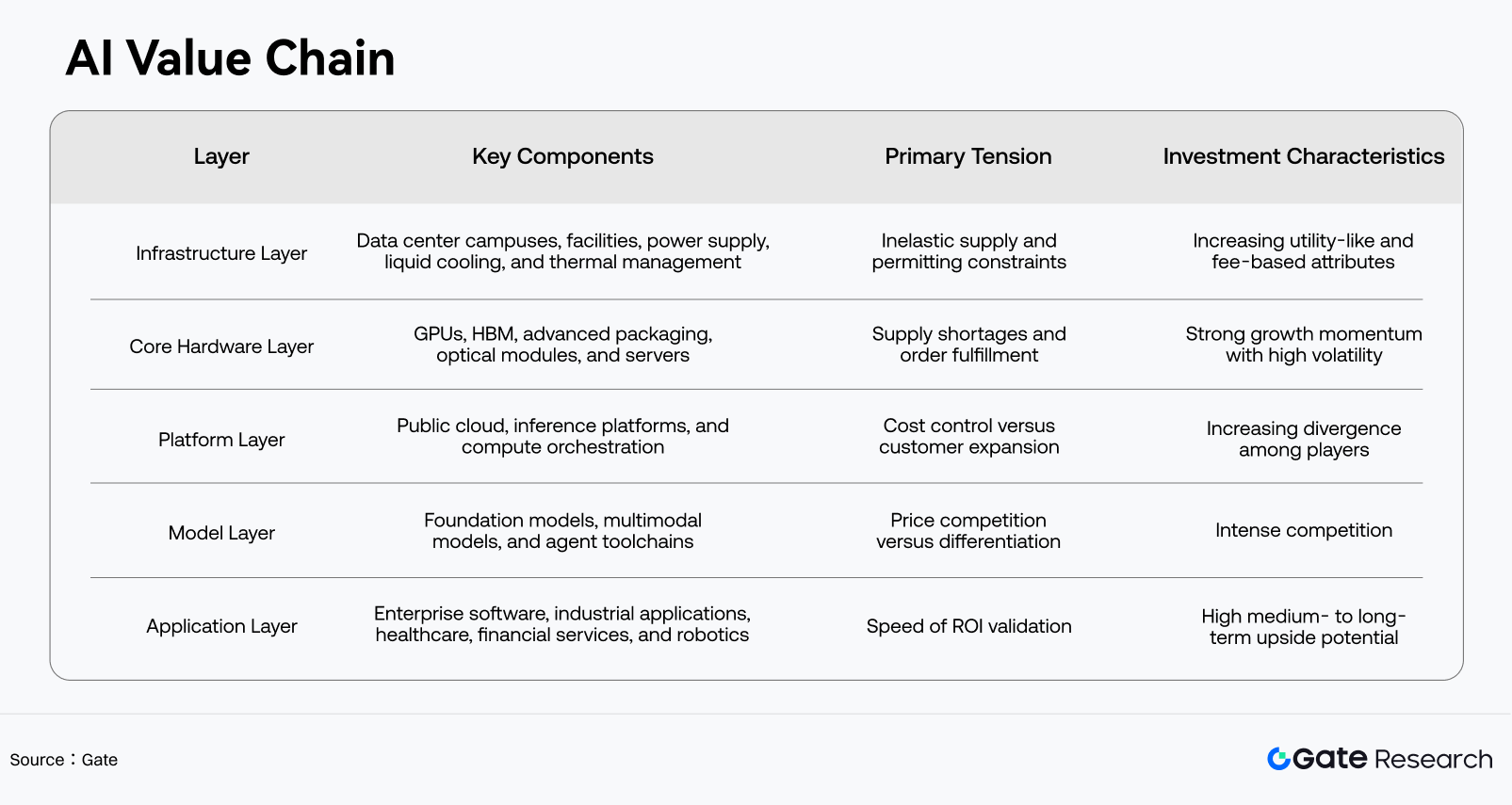
The infrastructure layer is responsible for turning abstract demand for computing power into real, operational physical space, including server rooms, power, cooling, and campus resources. In essence, it answers the questions: “Where exactly will these chips be placed, and what will allow them to operate reliably?” The core hardware layer provides the actual computing capability. GPUs and AI accelerators perform the main training and inference tasks, while HBM, advanced packaging, optical modules, servers, and other components jointly ensure that computing power can be released efficiently rather than remaining theoretical performance.
The platform layer packages hardware capabilities into services that enterprises can access, turning computing power from “equipment” into a “product.” The model layer converts computing power into intelligent capabilities, including training foundation models, optimizing inference efficiency, and building multimodal and agent toolchains. The application layer directly serves end users and enterprise scenarios, embedding the capabilities provided by the preceding layers into specific business processes such as office work, finance, industry, healthcare, and robotics. In other words, the application layer determines whether AI can ultimately generate revenue; the model layer determines whether AI is useful enough; the platform layer determines whether AI can be delivered broadly; and the hardware and infrastructure layers determine whether AI can be supplied at sufficiently low cost and with sufficient reliability. This is why research on the AI ecosystem cannot focus only on the most upstream chip companies; it must also explain how midstream platforms and downstream applications truly convert demand for computing power into commercial value.
In other words, the AI ecosystem is not a static structure but a dynamic system in which constraints continually shift and profits are continually redistributed. The segment most sought after by the market in the previous stage may not necessarily offer the greatest earnings upside in the next stage. Seemingly traditional areas such as power, cooling, and campus resources may also enter a period of valuation re-rating as they become new critical bottlenecks. Therefore, the focus of AI value-chain research is not merely to find the hottest theme, but also to anticipate the direction in which constraints and profits will migrate.
3. The AI Capital Expenditure Cycle: Why Infrastructure Is Becoming More Important
The greatest difference between AI and many previous software waves is its much greater dependence on physical infrastructure. Both training and inference require large-scale computing resources, and these resources must ultimately reside in actual data centers, power systems, and cooling facilities. For this reason, the underlying logic of the main AI investment theme is extending from “the expansion of model parameters” to “the expansion of infrastructure capacity.”
In the past, the market focused more on “how many GPUs are needed to train a model.” It now focuses more on whether data centers can obtain sufficient power, whether HBM and advanced packaging can keep pace with accelerator shipments, whether inference costs can fall far enough to permit large-scale enterprise deployment, and whether enterprise customers are willing to keep paying rather than remain at the pilot stage. This change means that the range of beneficiaries within the AI ecosystem is expanding, but it also means that divergence across the value chain will become more pronounced.
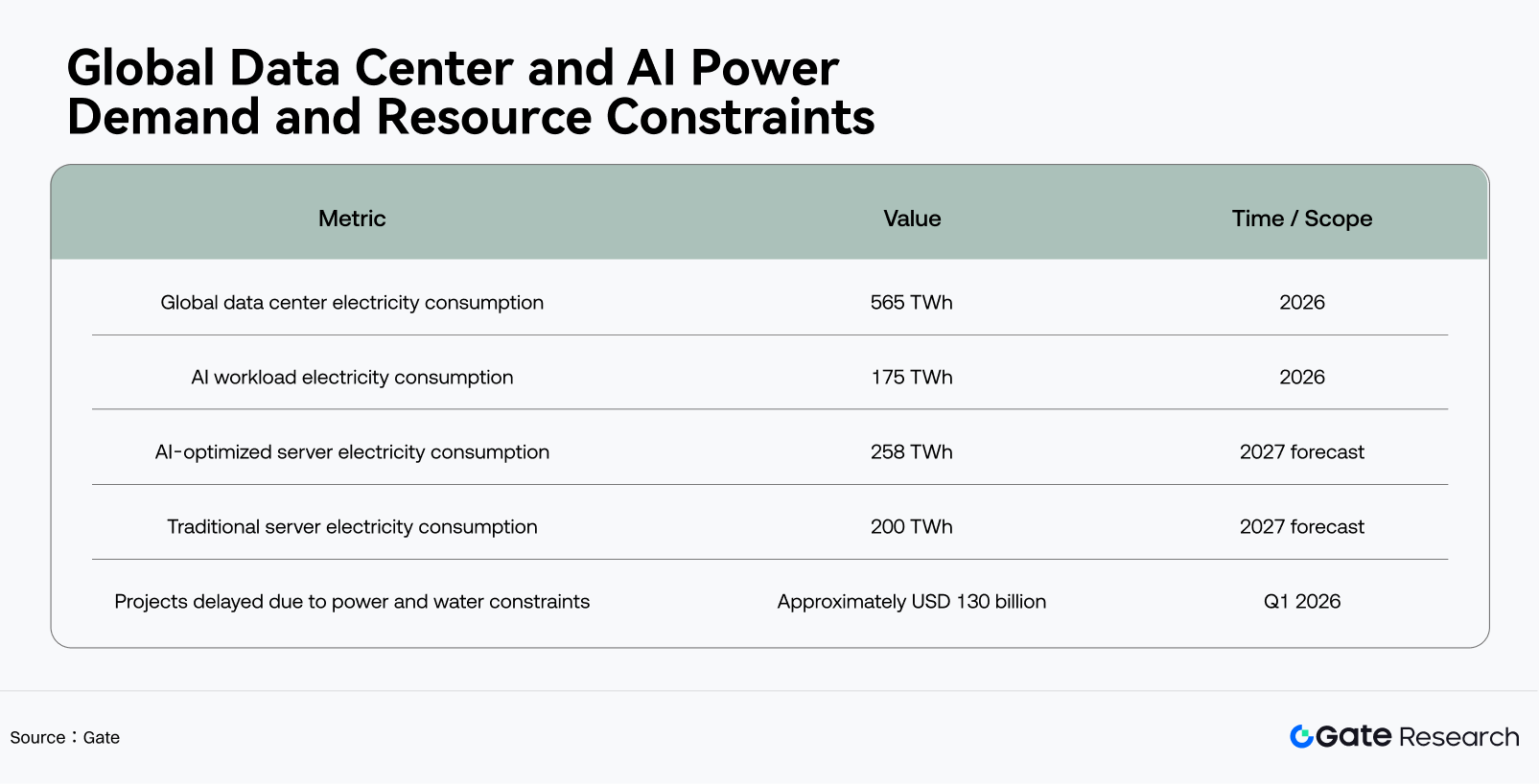
The fundamental constraint on the AI industry has extended from “whether chips are available” to “whether those chips can be installed in server rooms with power, water, and cooling capacity.” This makes internet data centers, power equipment, liquid cooling, and refrigeration not merely supporting facilities, but key resources in the industry ecosystem. For capital markets, this means that equipment companies, campus operators, and infrastructure companies traditionally viewed in conventional terms are gaining increasingly powerful growth narratives and valuation support.
Moving from trend projections to investable segments, the next critical question is which parts of the value chain can genuinely translate favorable industry conditions into profits for listed companies. Not all AI-related companies will benefit simultaneously, nor do all higrowth segments offer the same investability. Market share, supply barriers, customer structure, and the pace of profit realization determine differences in investment value across segments.
4. Key Segments: Who Will Become the Core Beneficiaries of the AI Ecosystem?
4.1 Public Cloud: AI Demand Is Concentrating More Rapidly Among the Three Major Cloud Providers
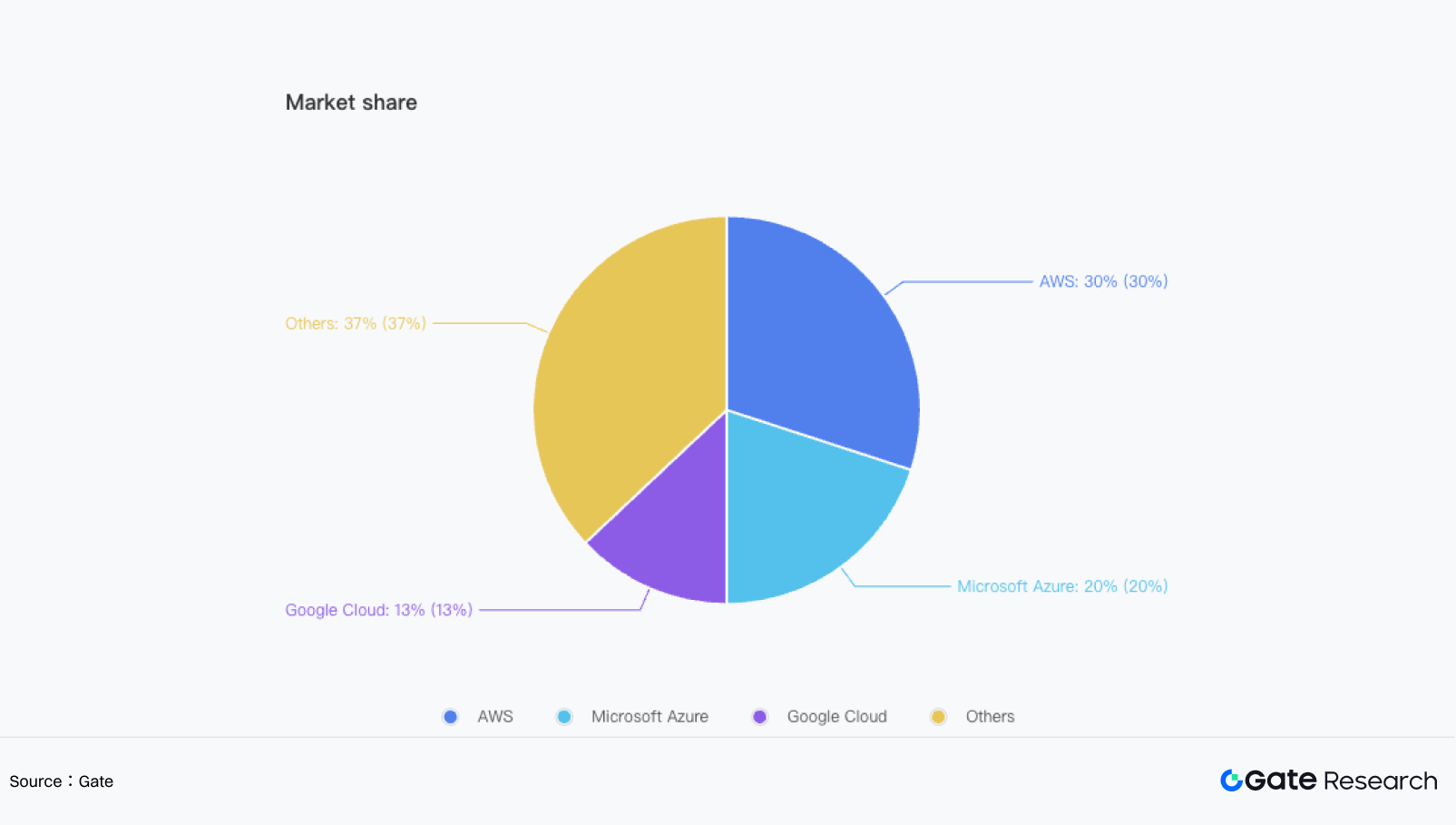
From a business-model perspective, cloud platforms are the part of the AI ecosystem that most clearly connects what comes before and after. On the one hand, cloud providers must continually invest in computing power, networks, and data center resources, absorbing the pressure of upstream capital expenditures. On the other hand, through model APIs, managed inference, enterprise development platforms, and industry solutions, they turn upstream hardware capabilities into subscription-based, scalable, repeatable service revenue. The true value of cloud platforms therefore lies not only in market share itself, but more importantly in whether they can transform AI infrastructure into long-term customer relationships and high-quality revenue.
4.2 Foundry: Advanced AI Processes Remain Concentrated Among the Leaders
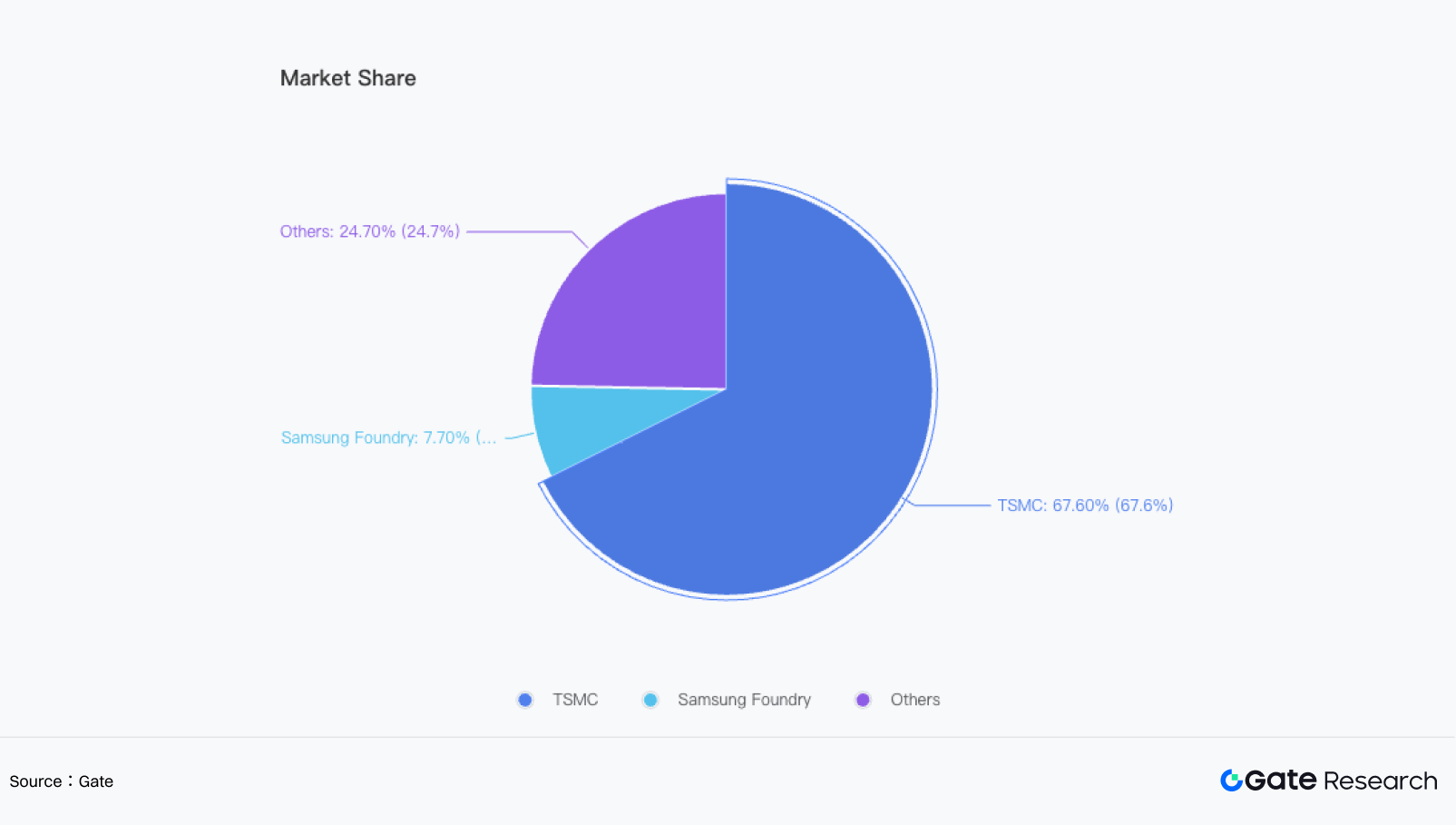
The investment value of the foundry segment lies not only in leading market share, but also in its pivotal position in the AI capital expenditure cycle. Both upstream chip designers and downstream cloud providers ultimately rely on advanced-process capacity to deliver finished products, so leading foundries essentially serve as the value chain’s “delivery hub.” When AI demand remains strong, foundries’ capacity utilization, bargaining power, and customer stickiness often benefit simultaneously.
4.3 DRAM and HBM: The Excess-Profit Center of the AI Memory Chai
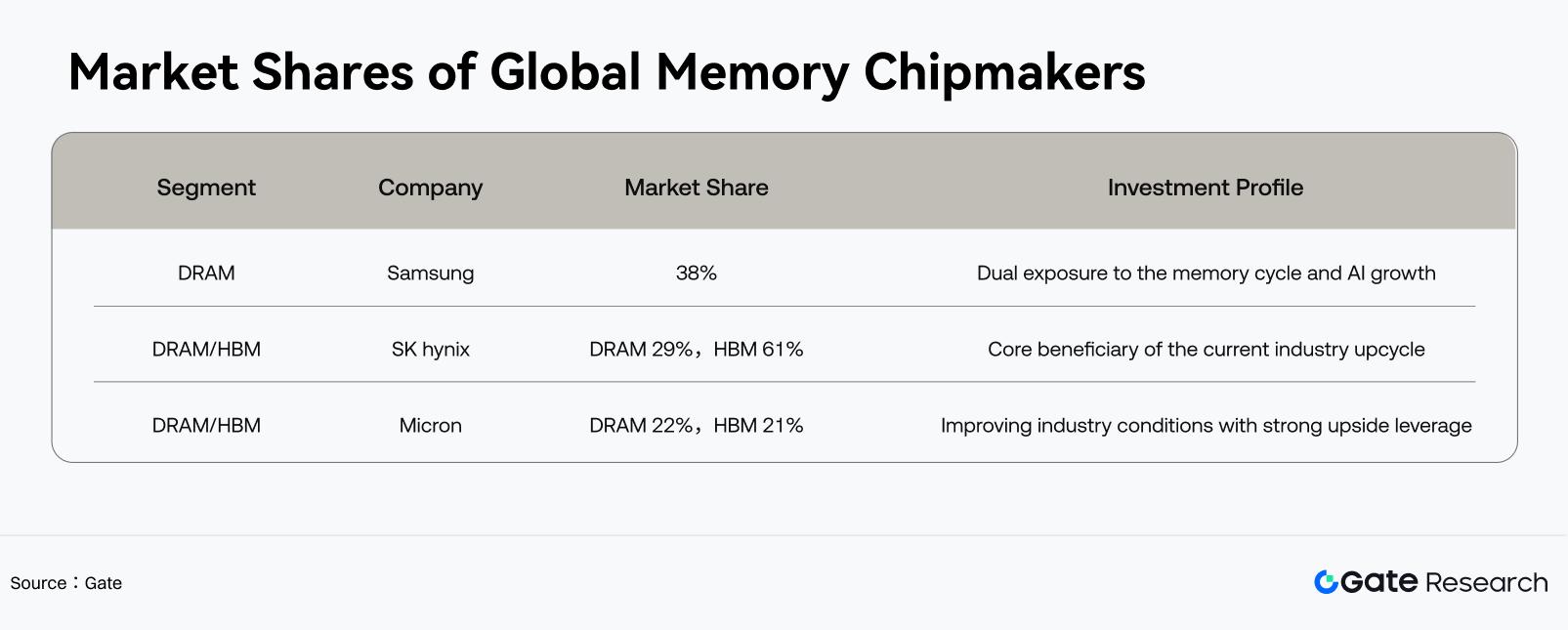
HBM is one of the most typical bottlenecks in the current AI hardware chain. Unlike ordinary DRAM, HBM is deeply tied to the pace of AI accelerator shipments, so its cycle is closer to “growth driven by scarce supply” than to a pure memory cycle. The memory segment is especially important in the current AI cycle because high-performance computing has sharply increased requirements for bandwidth, power consumption, and packaging coordination. HBM is not merely a capacity upgrade; it is a critical component directly related to unlocking accelerator performance and overall system efficiency.
4.4 GPUs and AI Accelerators: Ecosystem Dominance Remains with the Leaders
Competition in the AI era involves not only hardware performance, but also the CUDA ecosystem, developer stickiness, network interconnection, and complete-system solution capabilities. This is why the high barriers in the GPU segment are unlikely to be broken in the short term. More broadly, the competitive landscape in GPUs means that value-chain profits will not be distributed evenly. Those who control chip architecture, software ecosystems, and large-scale cluster deployment capabilities are more likely to convert one-time hardware sales into longer-term platform capabilities.
4.5 Data Center Support Infrastructure: Upgrading from a “Supporting Segment” to a “Core Resource”
The expansion of AI data centers is pushing many traditional “data center support” companies toward the core of the industry. Those who control access to resources are more likely to capture sustained returns during the AI capital expenditure cycle. Particularly against a backdrop of power constraints, rising liquid-cooling penetration, and tightening campus resources, companies once valued more like traditional infrastructure or equipment manufacturers are gaining more pronounced growth characteristics and scarcity premiums.
5. Investment Framework: How to Allocate Across Different Markets and Segments
From the perspective of implementation, the core assets in the AI ecosystem are not substitutes for one another; they are better understood as a portfolio structure ranging from core holdings to higher-upside exposures. Bottleneck assets provide exposure to the portfolio’s main industry cycle, toll-collector assets provide steadier cash flow and benefits from industry expansion, and monetization assets provide new sources of excess returns once the industry enters the stage of commercial validation. For investors, what truly matters is not betting on a single segment, but dynamically adjusting the weights of different assets as industry momentum is transmitted through the value chain.
6. Conclusion
From the perspective of industry development, the true significance of AI lies not only in creating new model capabilities, but also in propelling the entire technology industry into a new cycle of capital expenditure and business-model restructuring. The market previously viewed AI mainly in terms of training demand and chip-market conditions. A more reasonable understanding now is that AI is reshaping the distribution of value across chips, memory, networks, power, data centers, cloud platforms, software applications, and other segments.
Over a longer horizon, the true dividing line for the AI industry is not short-term share-price volatility, but whether industry capital expenditures can ultimately crystallize into stable business models and sustained free cash flow. Only when the ecosystem’s core participants can both maintain technological leadership and demonstrate a clear relationship between investment and returns can the industry’s central valuation level rise further. Researching AI investment opportunities therefore requires recognizing the direction of the long-term technological revolution while remaining sufficiently sensitive to medium-term earnings realization.
Data Sources:
Gate Research is a comprehensive blockchain and cryptocurrency research platform that provides deep content for readers, including technical analysis, market insights, industry research, trend forecasting, and macroeconomic policy analysis.
Disclaimer
Investing in cryptocurrency markets involves high risk. Users are advised to conduct their own research and fully understand the nature of the assets and products before making any investment decisions. Gate is not responsible for any losses or damages arising from such decisions.