Square
Following
Hot
News
Notifications
Profile

bullifyAA

vip
your crypto bestie
Peak Tier VIP 5
4
Following
48
Followers
248
Liked
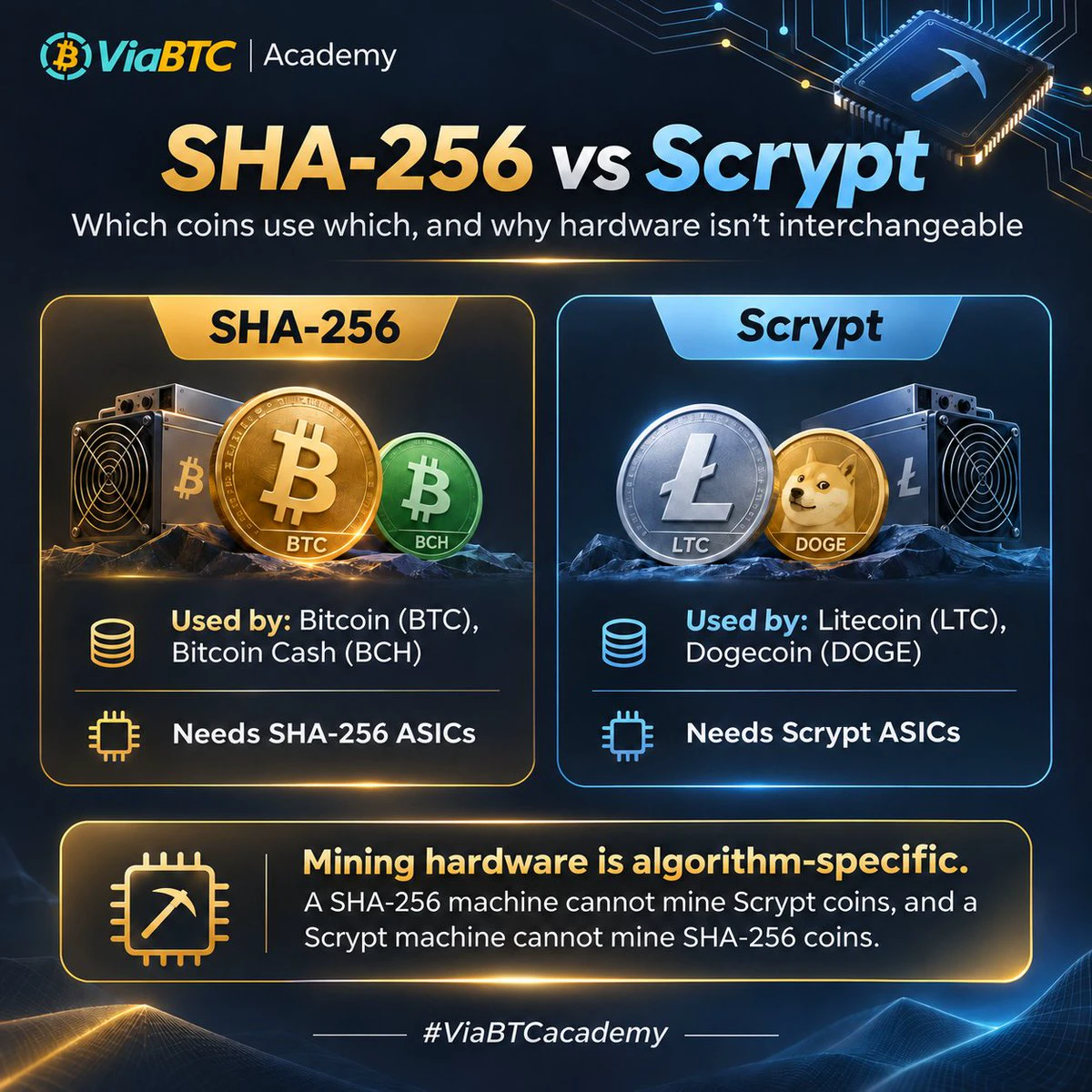
Not all mining machines can mine every coin
#Bitcoin uses SHA-256, while Litecoin and Dogecoin use Scrypt.
Why does it matter? Because each algorithm needs different mining hardware.
A SHA-256 ASIC cannot mine Scrypt coins, and a Scrypt ASIC cannot mine SHA-256 coins.
Remember: Before buying a mining machine, always check the coin's algorithm. The right hardware makes all the difference
#ViaBTCacademy
post-image
BTC-0.67%
LTC-0.07%
DOGE-0.22%
  • 1
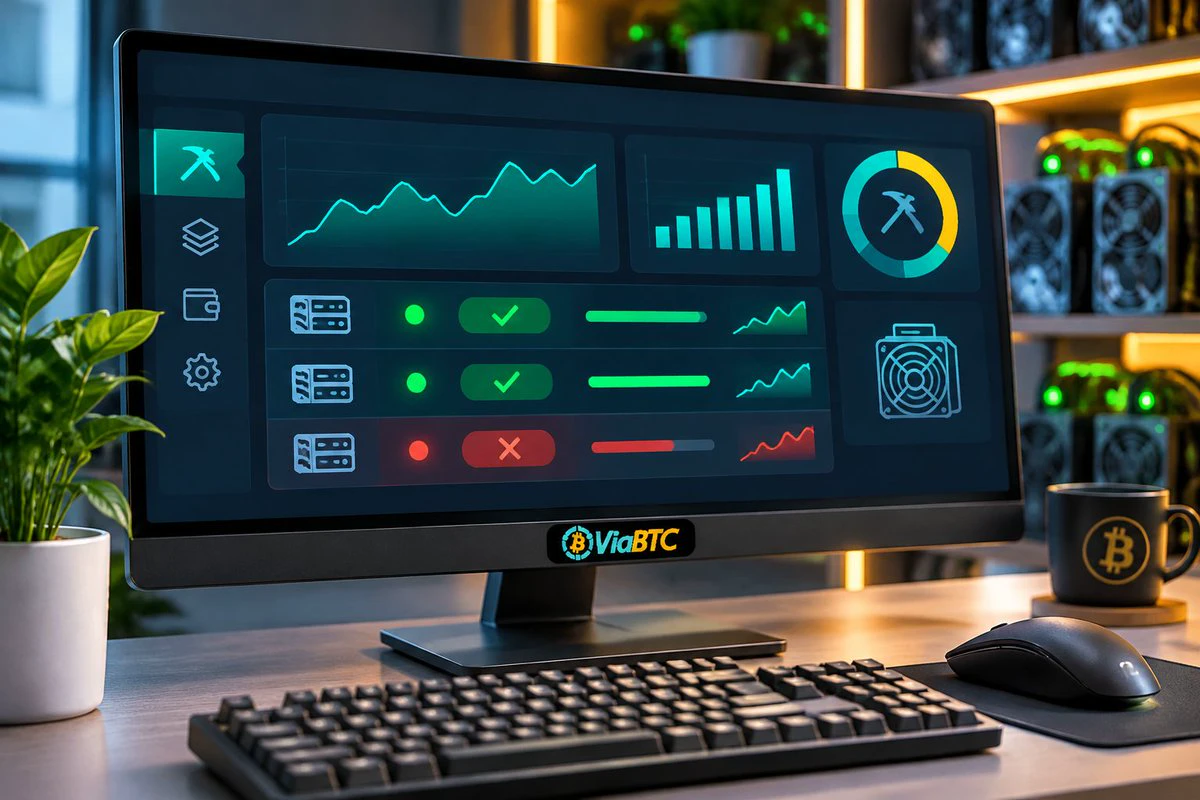
Fams Have you ever checked your #ViaBTC dashboard and found one of your workers showing Offline?
It happens, and the first thing to do is not panic or assume your miner is broken.
Here’s what I usually recommend checking first:
• Is your mining machine switched on?
• Is your internet connection working properly?
• Are your mining pool settings correct?
• Is your worker sending shares to the pool?
You can check your worker status under Pool → Workers on ViaBTC.
A little reminder: Offline doesn't always mean hardware failure. Sometimes the problem is just the connection or mining setup.
Keep an
post-image
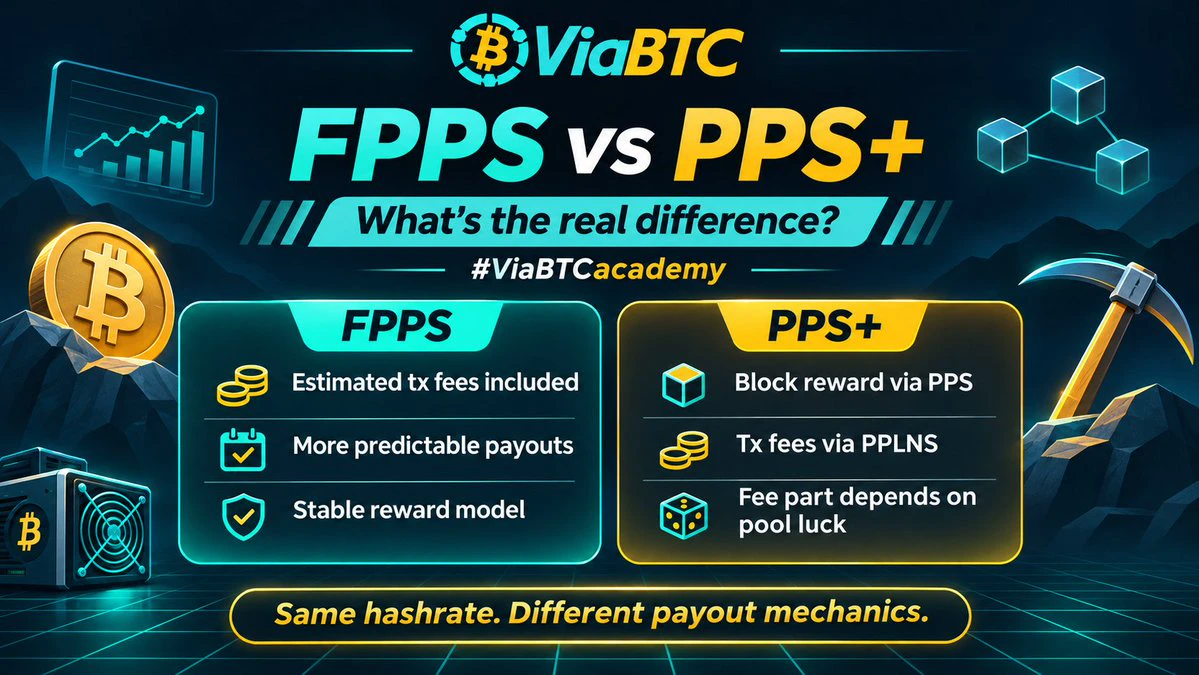
Ever wondered why FPPS and PPS+ payouts can look different, even when miners contribute similar hashrate?
The difference is mainly in how transaction fees are handled.
🔹 FPPS: Includes estimated transaction fees in miners' share payouts.
🔹 PPS+: Pays the block subsidy through PPS, while transaction fees are distributed separately through PPLNS.
So, FPPS offers more predictable fee payments, while PPS+ exposes the fee portion to pool luck.
Understanding these small differences can help miners make smarter decisions about their payout model.
#ViaBTCacademy #BitcoinMining
post-image
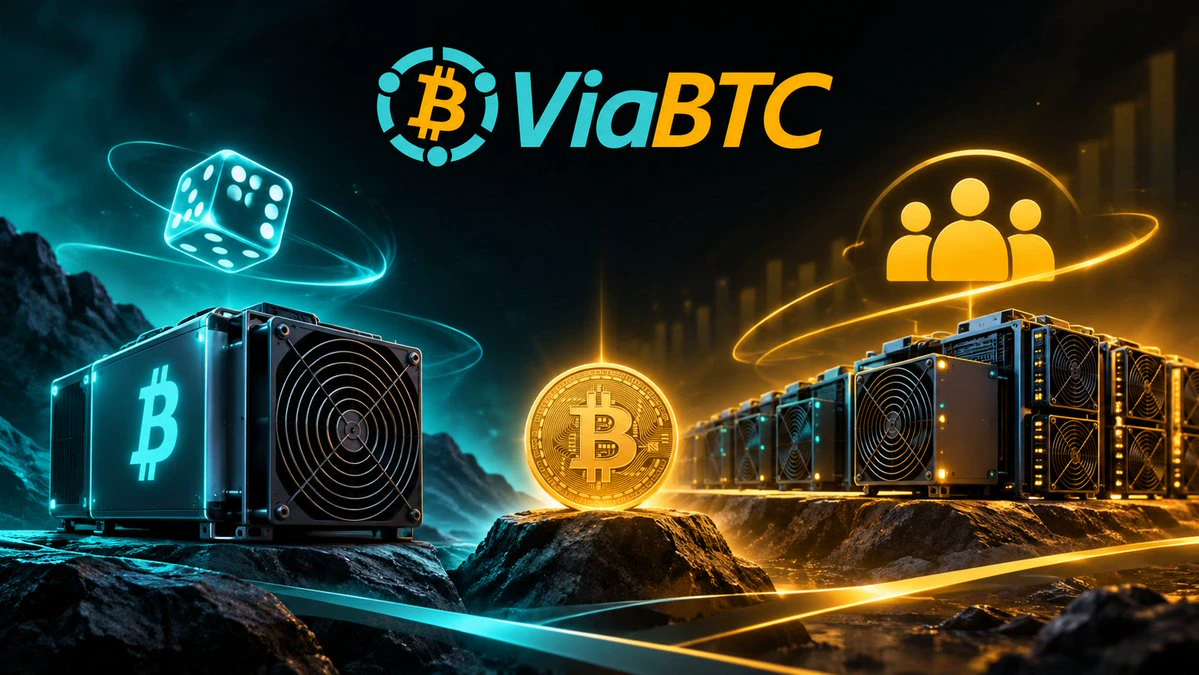
Ever wondered why two miners can get very different results even when they contribute similar computing power?
That's where solo mining and pool mining differ.
With solo mining, rewards depend heavily on luck. You might find a block and receive the reward, but the waiting time can be unpredictable.
With pool mining, multiple miners combine their computing power. When the pool earns rewards, they are distributed among participants according to the pool's payout system.
Here's the simple difference:
🔹 Solo Mining: More uncertainty, with rewards that can be far apart.
🔹 Pool Mining: Shared rew
post-image
ViaBTC-ID-20261109-BULLIFY-7K4M
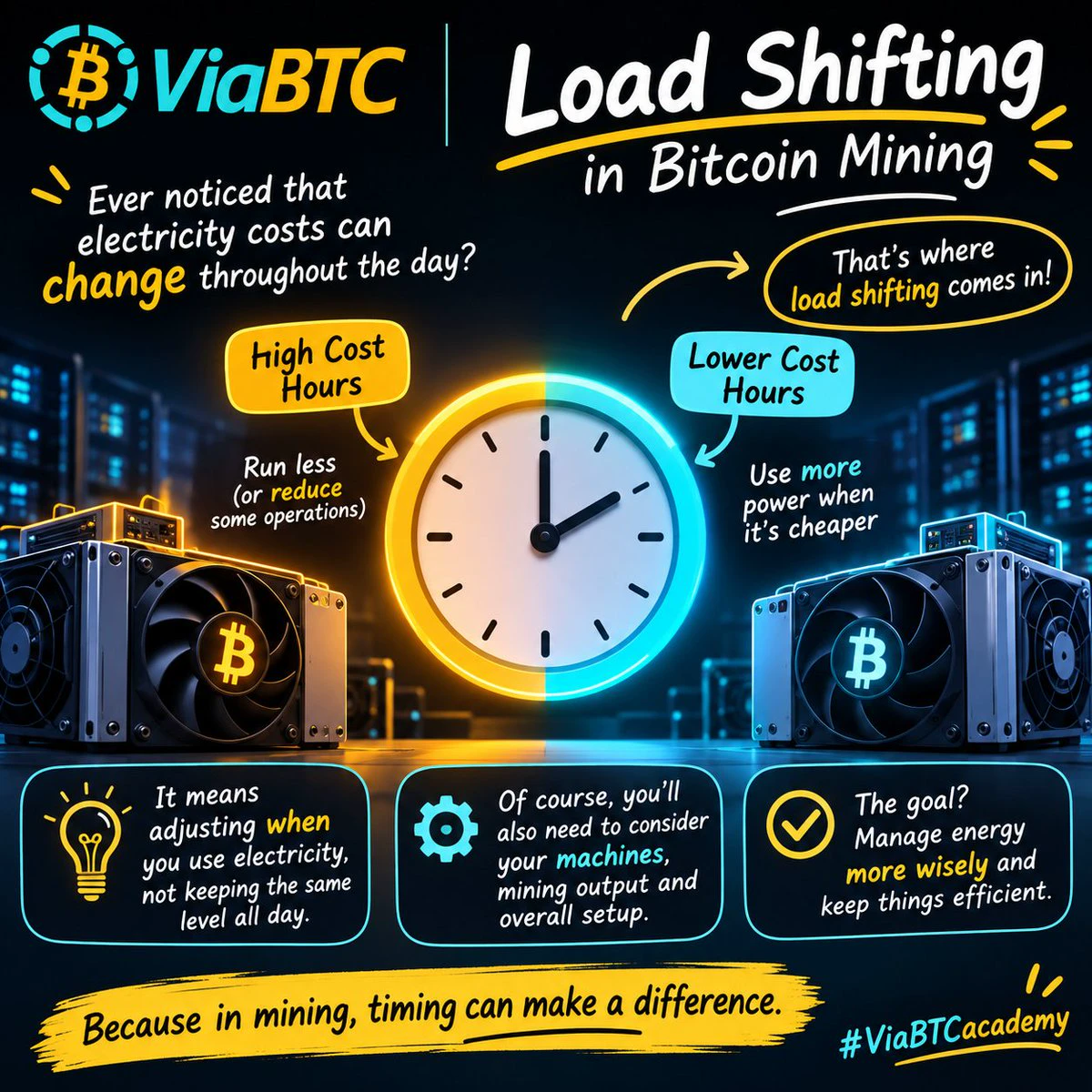
One thing miners often overlook is that electricity consumption can be managed differently throughout the day.
That's exactly what load shifting is about.
Instead of using the same amount of energy all the time, mining operations can adjust their power usage depending on electricity demand and available rates.
For example, some machines or activities can run less during peak hours and more when electricity is cheaper.
Of course, this needs proper planning because changes in power usage can also affect mining output.
It's a simple concept, but an important one: understanding your energy usage c
post-image
Some charts deserve a little extra attention, and $ZIG is one of them.
The bigger picture is getting interesting, but I'm more focused on how the market reacts at these levels than making predictions too early.
If momentum starts building, we could see some serious excitement around $ZIG in the next bull phase.
No chasing, no rushing. Just watching how the story unfolds.
Could be an interesting one to follow.
ZIG-8.79%
  • 1
Your miner finds a share, but the pool receives it too late. Why?
That's Stratum latency
Long distances, unstable internet, and network delays can turn valid work into stale shares.
Lower latency = faster share submission.
Stable connection = fewer unnecessary delays.
Remember, it's not just about how much hashrate you have. It's about how efficiently your shares reach the pool.
#BitcoinMining #ViaBTCacademy
post-image
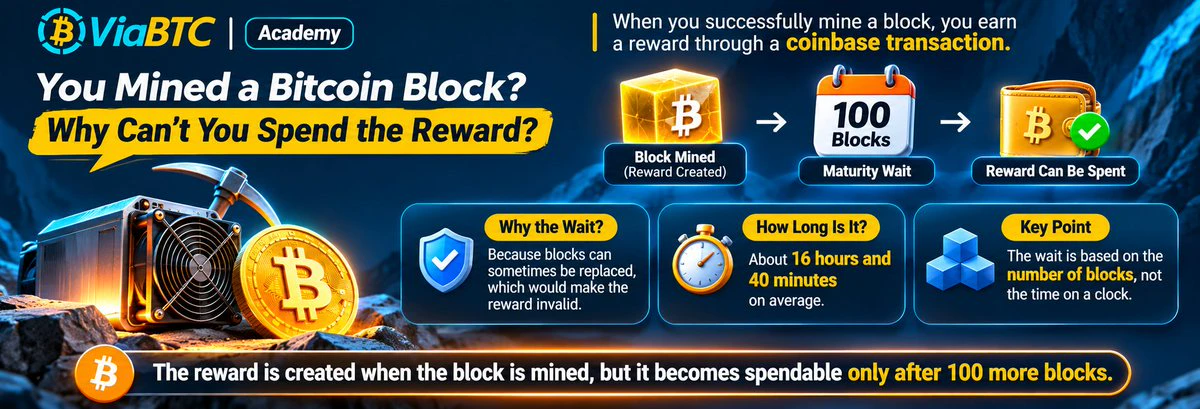
Mined a Bitcoin Block? You Can't Spend the Reward Just Yet!
When miners find a block, they earn $BTC through a coinbase transaction. But they must wait for 100 more blocks before spending it.
Why? Because blocks can sometimes be replaced, making their rewards invalid.
That's roughly 16 hours and 40 minutes on average.
Bitcoin measures this wait in blocks, not hours.
The reward is earned instantly, but spending it takes patience! ₿
#ViaBTCacademy #BitcoinMining
post-image
BTC-0.67%
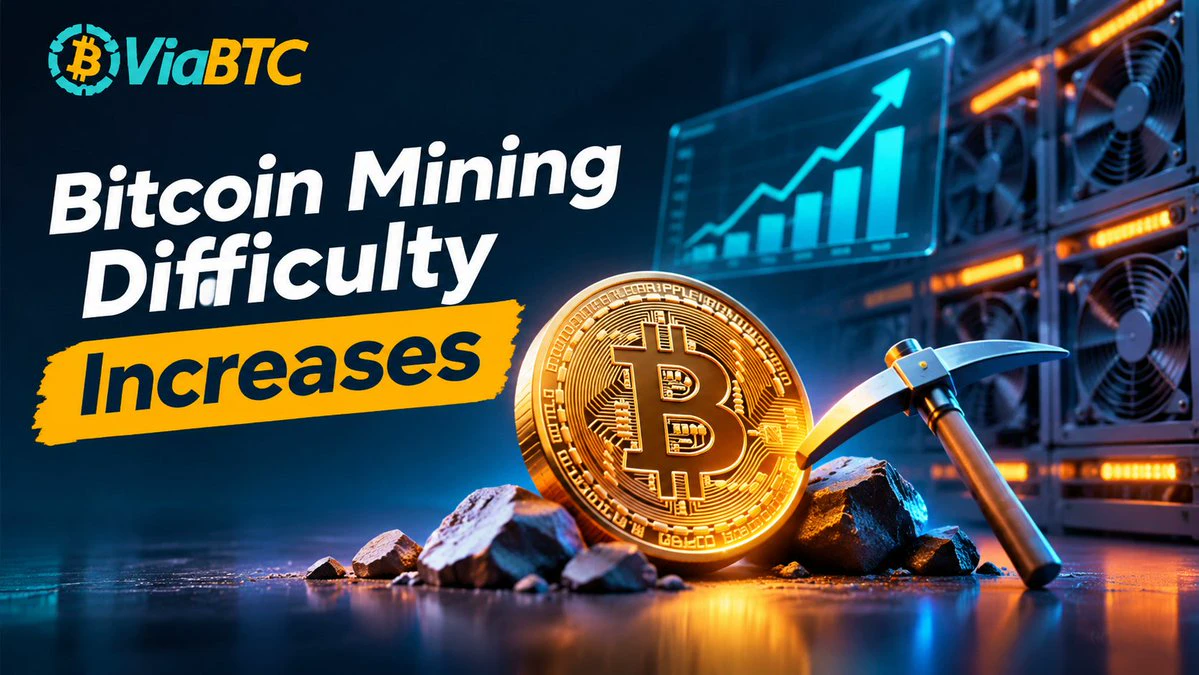
Ever wondered what happens when more miners join the Bitcoin network?
Bitcoin mining difficulty recently increased, meaning miners now need more computing power to compete for new blocks.
In simple words, mining is getting more competitive!
But here's the interesting part: Bitcoin automatically adjusts its mining difficulty to keep block creation around every 10 minutes.
No one needs to manually control it. The network handles it on its own. Pretty amazing, right?
That's why understanding how Bitcoin works behind the scenes is so important.
Learn the network, understand the technology!
#ViaB
post-image
BTC-0.67%
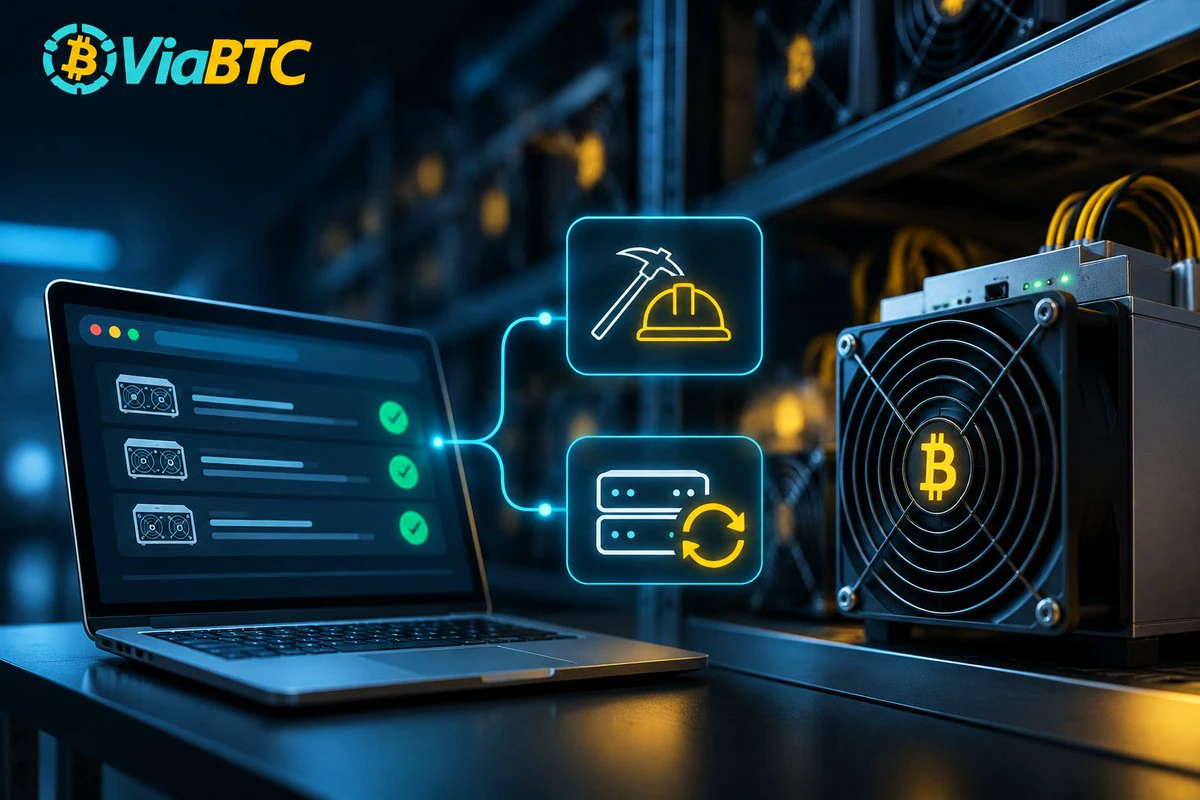
A mining setup is only as reliable as its backup plan.
Imagine your primary pool connection goes down. Do you know which miner is affected, and where it should reconnect?
That's where two simple settings matter:
🔹 Worker Naming: Give every miner a recognizable identity so monitoring and troubleshooting become easier.
🔹 Failover Ports: Configure a backup connection to help miners stay connected if the primary endpoint becomes unavailable.
Small configuration decisions can make a big difference when every minute of mining uptime counts.
Build smarter. Stay prepared.
#ViaBTCacademy #BitcoinMin
post-image
Load More