Readers new to the Gate Earn hub who need a clear split between on-chain staking and platform lending should start here. Gate Simple Earn lends idle tokens into a borrow pool, while Gate On-Chain Earn handles PoS delegation; Soft Staking accrues on spot balance snapshots, and Idle Earn targets idle USDT. The sections below focus on PoS staking and Gate On-Chain Earn.
Key Takeaways
- Crypto staking locks tokens on PoS networks to support validation; rewards come from protocol-level delegation, not platform lending interest.
- Gate On-Chain Earn (Staking) lists PoS staking products; Simple Earn lends idle assets into a borrow pool—the mechanisms differ and Simple Earn should not be called staking.
- Est. APR is a reference rate that adjusts with network rewards, delegation size, and product rules—it is not a guaranteed return.
- Locked Staking usually carries fixed or minimum hold periods; redemption timing depends on product type, on-chain unbonding, and platform processing rules.
What Is Crypto Staking?
Crypto staking means locking or delegating tokens on proof-of-stake blockchains so validators can participate in validation and block creation, helping secure the network. Unlike proof-of-work mining, which relies on computing power, PoS uses staked assets as its consensus mechanism.
Common forms include delegated staking to an existing validator, aggregated delegation through an exchange or custodial platform, protocol-defined locked governance, or solo staking by running your own validator node. In PoS networks, validators process transactions and earn rewards typically paid in the chain's native token through inflation, transaction fees, or incentive pools. Ethereum uses PoS consensus after the Merge; other PoS chains follow similar delegation models (see Ethereum.org staking overview).
Not all cryptocurrencies can be staked—only assets on PoS blockchains support staking mechanics.
How Does PoS Staking and Network Security Differ From Simple Earn?
On-chain PoS staking and Gate Simple Earn solve different problems: the former participates in the blockchain's consensus mechanism and helps process transactions; the latter lends idle assets inside the platform to earn lending interest.
| Dimension |
PoS On-Chain Staking |
Simple Earn |
| Mechanism |
Available on proof of stake blockchains: delegate to validators and earn rewards |
Lend into a borrow pool |
| Gate entry |
Earn hub → On-Chain Earn |
Earn hub → Simple Earn |
| Reward source |
Protocol block / delegation rewards that let users receive rewards for network participation |
Lending interest |
| Term |
Often includes lock or unbonding wait |
Flexible Term or Fixed Term by product |
| Is it "staking"? |
Yes |
No (lending-based earn) |
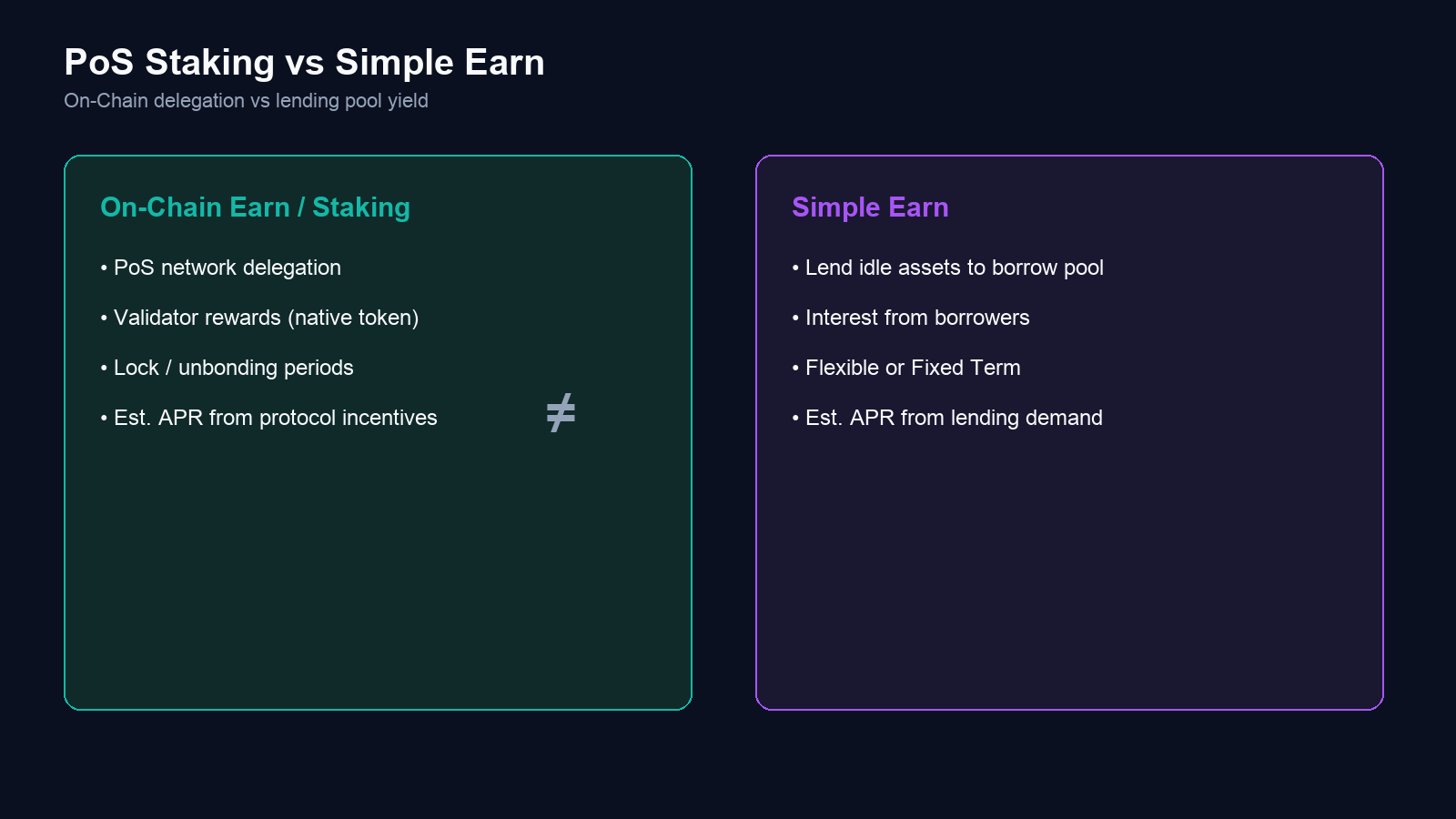
Fig. 1. On-Chain Earn delegates on PoS networks; Simple Earn lends into a borrow pool—the mechanisms differ.
Yield farming is a different DeFi strategy and should not be confused with PoS staking.
Simple Earn must not be labeled a staking product. PoS network rewards belong under Gate On-Chain Earn or the Staking Help Center. Lending idle tokens uses Gate Simple Earn. Soft Staking is a separate path—usually without active subscription—and differs from both Simple Earn and On-Chain Earn; Simple Earn vs Soft Staking maps the boundary. Idle Earn targets idle USDT. For Wealth versus Earn hub entry points, Wealth vs Gate Earn explains the split.
How Does Gate On-Chain Earn Work?
Gate On-Chain Earn (Staking) is the PoS staking product set inside the Gate Earn hub. In the staking process, users commit their own crypto to a selected product that routes participation on supported networks; after choosing a network and product, users Subscribe, Gate aggregates delegation and handles on-chain operations under product rules, and rewards are distributed on a defined schedule.
Typical flow:
-
Open Earn → On-Chain Earn in a Gate account (or visit gate.com/staking).
-
Browse stakeable tokens, Est. APR, lock requirements, minimum Subscribe amounts, expected staking rewards, and the staking period.
-
Select a product, enter the Subscribe amount, and confirm rules before submitting.
-
During the hold period, rewards accrue per product terms; holdings pages show accumulated yield and current Est. APR.
-
To exit, when the staking period ends or redemption conditions are met, submit a Redeem request; settlement may still depend on lock terms and on-chain unbonding rules.
Gate On-Chain Earn covers multiple PoS networks and term structures, including flexible and Locked Staking products. Flexible products carry fewer Redeem restrictions; Locked Staking products block early exit during the agreed period or require additional unbonding time. Confirm live parameters on product pages and in the Staking Help Center. This exchange staking model simplifies participation because users do not manage validator operations or private keys directly.
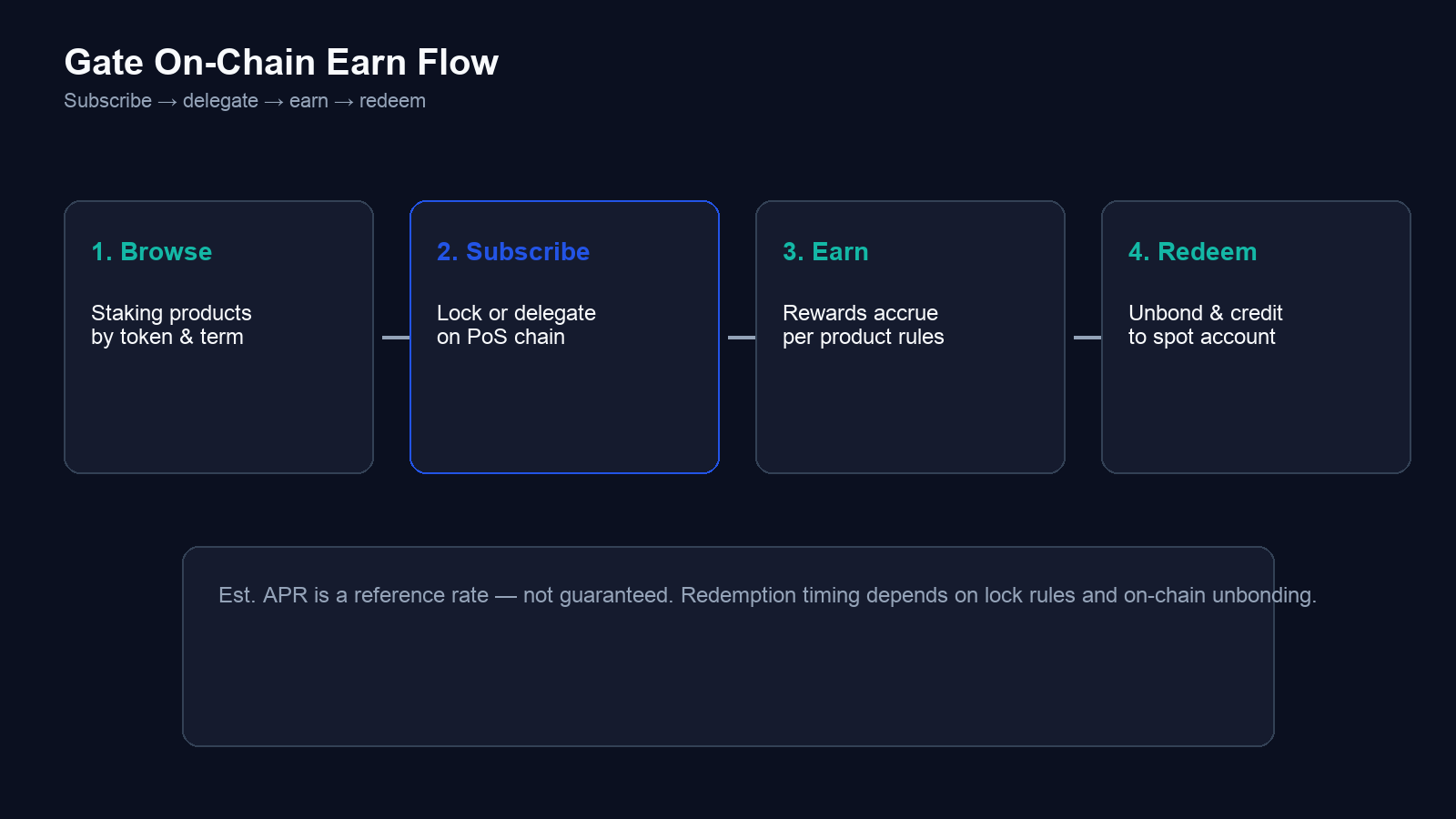
Fig. 2. Typical On-Chain Earn path: browse products, Subscribe, earn rewards, then Redeem when conditions are met.
Locked Staking, Staking Rewards, Redemption, and Est. APR
Locked Staking locks tokens for a fixed or minimum hold period, or lock up periods, in exchange for typically higher reward weight. During that time, your staked assets cannot trade or withdraw, and the staked cryptocurrency only becomes redeemable after the lock ends; some networks then add a separate unbonding wait.
Redeem returns subscribed assets from the product to the spot wallet. Flexible products usually settle quickly; Locked Staking requires the lock to finish and may only return funds after the staking contract and any network unbonding rules have completed. Check the displayed estimated arrival time before Subscribing.
Est. APR is Gate's annualized reference based on current network reward rates, delegation scale, and product rules—it updates dynamically. Rewards may generate income or support passive income, but APR is not realized absolute return and does not guarantee future levels; network parameter shifts, delegation queues, or product caps can change outcomes. The same "estimate, not promise" principle in Est. APR explained applies to On-Chain Earn displays.
What Should You Know About Passive Income Before Using On-Chain Earn?
On-Chain Earn sits under both network-layer rules and platform product rules. Users often stake digital assets to earn passive income, but before Subscribing, confirm supported networks, minimum Subscribe size, lock period and Redeem windows, reward payout frequency, and any period when assets stay unusable.
Key risks include token price volatility, limited liquidity during locks, validator- or network-level slashing, and smart-contract or bridge risks where relevant. Whether staking crypto safe depends on market, validator, platform, and protocol factors. Liquid staking can introduce additional risks beyond standard locked staking. It may resemble a yield product more than a savings account, but it does not carry the protections of traditional savings products. Gate On-Chain Earn products are non-principal-protected; rewards shift with network and product rules, and past Est. APR does not predict future results. This article is educational and not investment advice, and readers should consider professional guidance before acting.
Auto-Earn is a separate feature that may route eligible spot balances into Simple Earn and other earn paths automatically—it is not the same as PoS delegation on On-Chain Earn. Read each product's rules before enabling either path (see Earn Hub Guide (Web)).
Summary
Crypto staking uses PoS mechanics to lock or delegate tokens for on-chain validation rewards. Gate On-Chain Earn centralizes PoS staking products, displays Est. APR, and manages Subscribe and Redeem flows; Simple Earn is lending-based yield and must not be mixed with on-chain staking terminology. Clarify whether the goal is network staking or lending idle assets, then compare lock terms, Redeem rules, and APR display logic. Simple Earn Subscribe steps covers Subscribe and holdings management for lending yield; on-chain PoS entry is Gate On-Chain Earn.
FAQ
Is crypto staking the same as mining?
No. Mining usually refers to PoW hashpower competition that uses computing power to solve complex mathematical problems, while staking refers to locking or delegating tokens on PoS networks using staked coins instead of mining hardware. Consensus design, hardware needs, and reward sources differ.
Does Gate Simple Earn count as staking?
No. Simple Earn lends user assets into a borrow pool to earn interest—a platform lending mechanism, not PoS on-chain staking. PoS rewards belong under Gate On-Chain Earn.
Is Est. APR a fixed return?
No. Est. APR is a reference rate derived from current network and product parameters. It adjusts as reward rates, delegation size, and rules change and does not guarantee returns.
Can Locked Staking be redeemed early?
Most Locked Staking products do not allow early Redeem during the agreed staking period. Funds may remain unavailable until the staking period ends and any on-chain unbonding finishes. Confirm Redeem terms on the Subscribe page before committing.
How is On-Chain Earn different from Soft Staking?
On-Chain Earn covers PoS network delegation staking; Soft Staking typically accrues rewards on spot balances under separate rules without active on-chain delegation Subscribe. By contrast, pooled staking or a staking pool lets multiple users combine funds rather than delegating directly from an individual balance. Entry points, terms, and reward sources differ between the two paths.