In the crypto payment card market, most products hold funds that sit idle once topped up and stop earning yield. Falcon Card differs in that its spending funds come from the yield-bearing USDf: users first mint USDf against collateral, stake it into sUSDf to keep earning, and only convert USDf into the card when they need to spend. This spend-what-earns structure gives Falcon Card a distinctive position among 2026 crypto payment cards. The USDf minting and staking process forms the upstream of the Falcon Card spending flow.
Key takeaways
- Falcon Card is a crypto payment card launched by Falcon Finance on July 20, 2026, converting USDf to U.S. dollars at a 1:1 ratio for spending.
- Falcon Card supports online and in-person merchants across more than 90 countries and regions, with no subscription fee.
- Falcon Card's spending funds come from the yield-bearing USDf/sUSDf, connecting collateral minting, staking yield, and real-world spending into one loop.
- Using Falcon Card involves risks around regional compliance, USDf peg stability, merchant acceptance, and tax reporting.
What is Falcon Card and what problem does it solve?
Falcon Card is a crypto payment card from Falcon Finance whose core role is to extend the on-chain liquidity of USDf from the wallet into real-world spending. Before Falcon Card, USDf was mainly used for on-chain trading, lending, and staking yield, with funds staying inside the crypto ecosystem. Falcon Card lets USDf be converted to U.S. dollars at a 1:1 ratio and spent directly at online and offline merchants worldwide.
The core problem Falcon Card solves is how a yield-bearing asset can be spent directly. Funds in traditional crypto payment cards are typically idle stablecoins, whereas Falcon Card's funds come from USDf, a synthetic dollar that can itself keep earning yield when staked into sUSDf. According to Falcon Finance's July 2026 statement, Falcon Card is the final step in the loop of collateral unlocking USDf and the card making USDf spendable.
How does Falcon Card work? The USDf-to-fiat spending flow
Falcon Card operates in five steps that progressively turn collateral into spendable dollars.
- Deposit collateral: the user deposits eligible collateral such as BTC, ETH, or tokenized RWA.
- Mint USDf: the on-chain synthetic dollar USDf is minted at an overcollateralized ratio.
- (Optional) Stake to sUSDf: USDf is deposited into a vault to become the yield-bearing certificate sUSDf, continuously earning roughly 4-5% APY.
- Load Falcon Card: USDf is converted to a U.S. dollar balance at a 1:1 ratio and loaded into Falcon Card.
- Spend online and offline: spend at merchants across more than 90 countries and regions, settled in U.S. dollars.
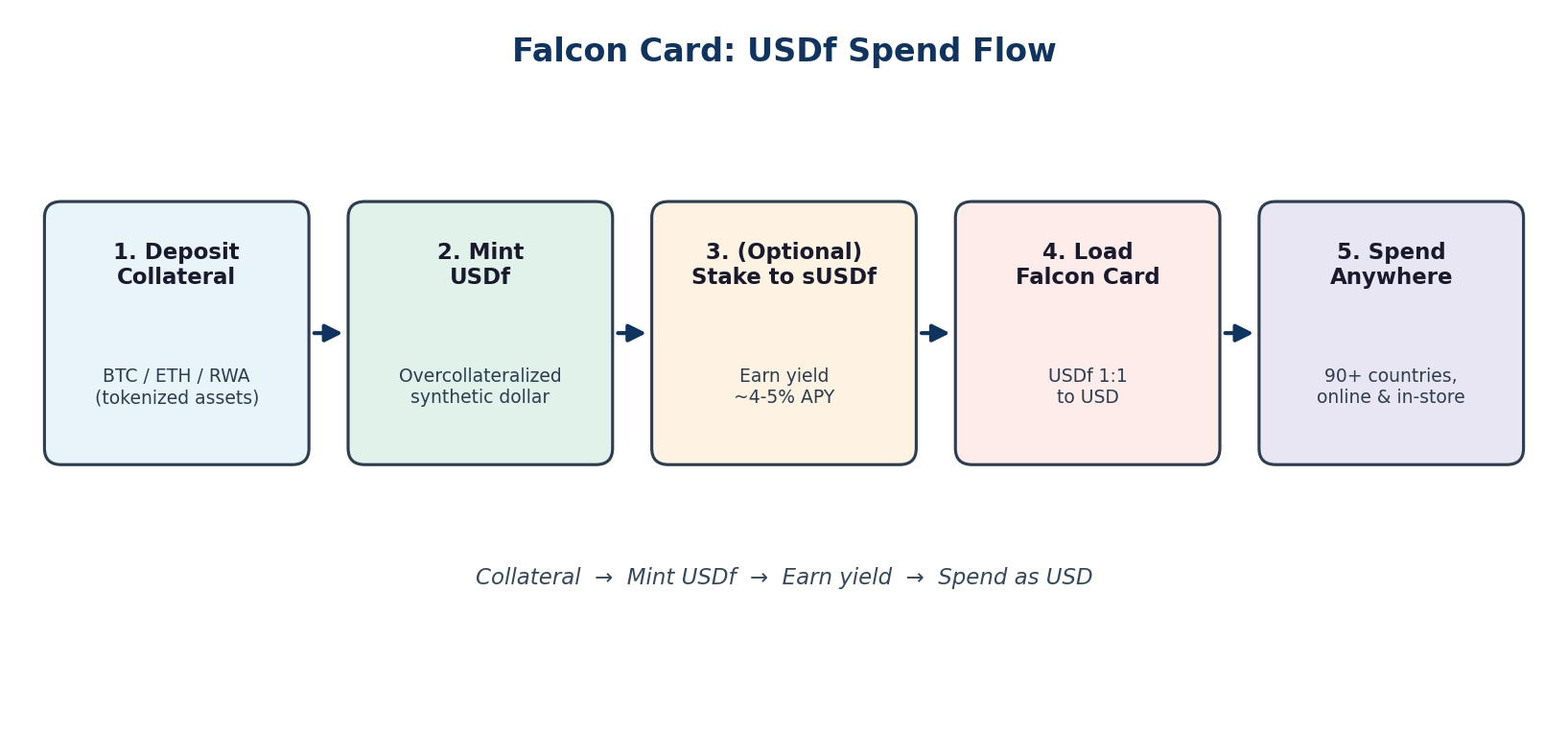
Figure 1. Falcon Card USDf spending flow: collateral mints USDf, optionally staked for yield, then converted 1:1 into the card for spending.
The key to this flow is step three: spending funds can keep earning yield until the moment they are used, which is the essential difference between Falcon Card and most idle-funds crypto cards.
A concrete example makes the loop clearer. A user deposits tokenized gold or bitcoin as collateral and mints USDf, then stakes that USDf into sUSDf so the balance accrues yield day by day. Bitcoin is the most common collateral asset in the protocol, and holding bitcoin while still being able to spend against it is a central part of the card's appeal. When the user wants to pay for an online subscription or an in-store purchase, only the amount needed is converted from USDf into the card's dollar balance at a 1:1 ratio, while the rest of the bitcoin-backed position can remain staked and earning. The card therefore acts as a spending front-end on top of an already productive stablecoin position, rather than as a separate pool of idle funds.
What are Falcon Card's core features and fees?
Falcon Card's core characteristics can be understood across supported regions, conversion ratio, fees, and spending scenarios.
| Dimension |
Detail |
| Launch date |
July 20, 2026 |
| Conversion ratio |
USDf 1:1 to U.S. dollars |
| Supported regions |
90+ countries and regions |
| Subscription fee |
None |
| Spending scenarios |
Online and in-person merchants |
| Settlement currency |
U.S. dollar |
Falcon Card charges no subscription fee, one of its differences from some subscription-based crypto cards. Specific FX fees, cross-border fees, and ATM withdrawal fees are subject to Falcon Finance's latest official disclosures. Fees and supported regions can be cross-checked on the official Falcon Finance site and in Anchorage Digital disclosures.
How is Falcon Card different from other crypto payment cards?
The core difference between Falcon Card and exchange-type crypto cards is whether spending funds earn yield. Funds in most exchange cards are stablecoins that sit idle once topped up, with cashback as the main selling point; Falcon Card's funds are the yield-bearing USDf/sUSDf, with spend-what-earns as the main selling point.
The two models have different emphases and neither is absolutely better: cashback cards suit frequent small spending with rebates, while yield-bearing cards suit users who want funds to keep growing until spent. Falcon Card is distinctive in integrating Falcon's RWA collateral, USDf minting, sUSDf yield, and card spending within a single ecosystem.
Falcon Finance is designed as a universal collateralization infrastructure, and Falcon Card is the spending layer built on top of that infrastructure. The protocol's broader goal is to bring real world assets on-chain so they can be used productively, and the card is one of the earliest spending interfaces for that vision. In its first year, the system aims to let early users unlock liquidity from real world collateral and spend it without giving up the underlying position, turning tokenized real world assets into working capital that can circulate over the year. For early adopters, that means a single deposit can keep generating value across the year rather than sitting idle. The card is issued against the same collateral that a user has already opened to mint USDf, and that collateral can unlock a dollar balance on the card, so the position keeps working behind the scenes over time rather than sitting as a separate pool of funds. Each top-up can unlock additional spending power, letting a user unlock more of the card's limit as more collateral or USDf is added. Starting from deposited collateral, the system is designed to let a user unlock liquidity, route part of it into yield vaults, and still have a spendable balance ready when needed. Over time, the same vaults that hold staked USDf can coexist with a card balance, and the questions users ask most often are how the two balances relate. This is the practical meaning of a universal collateralization infrastructure: one pool of collateral supports minting, yield, and payments at the same time, and each use of the card draws on that single opened position.
It also helps to separate Falcon Card from a conventional bank debit card. A bank debit card draws down a fiat balance that typically earns little to no interest, whereas Falcon Card draws on a USDf position that may have been earning yield until the point of conversion. The trade-off is that Falcon Card inherits the risks of a synthetic stablecoin, including peg and smart-contract risk, that a traditional deposit account does not carry. Understanding this distinction lets users judge whether the yield-before-spending benefit outweighs the added protocol risk for their own situation.
What are the advantages and risks of using Falcon Card?
The advantages and risks of using Falcon Card should be weighed together, focusing on the convenience of the yield-bearing structure and the risks of the stablecoin itself.
Advantages:
- Spend yield-bearing assets directly: USDf can be staked into sUSDf to keep earning, so funds are not idle before spending.
- No subscription fee: lowers the long-term cost of holding the card.
- Broad coverage: supports online and offline merchants across more than 90 countries and regions.
- Ecosystem loop: deeply integrated with Falcon's collateral, minting, and yield systems.
Risks:
- Regional compliance: different jurisdictions impose different rules on crypto payment cards, and some regions may be restricted.
- USDf peg risk: as a synthetic dollar, USDf could lose its peg in extreme market conditions.
- Merchant acceptance: actual acceptance depends on card networks and merchant coverage.
- Tax reporting: spending USDf may constitute a taxable event in some jurisdictions and must be self-reported.
How to open and use Falcon Card?
The neutral process for opening Falcon Card is typically: complete KYC verification on a Falcon account, deposit collateral and mint USDf (or top up USDf), apply for and bind Falcon Card, then load USDf into the card and start spending. Starting this flow requires only a verified account and an eligible collateral balance, with no separate subscription. Specific eligibility, supported regions, and limits are subject to Falcon Finance's latest official guidance.
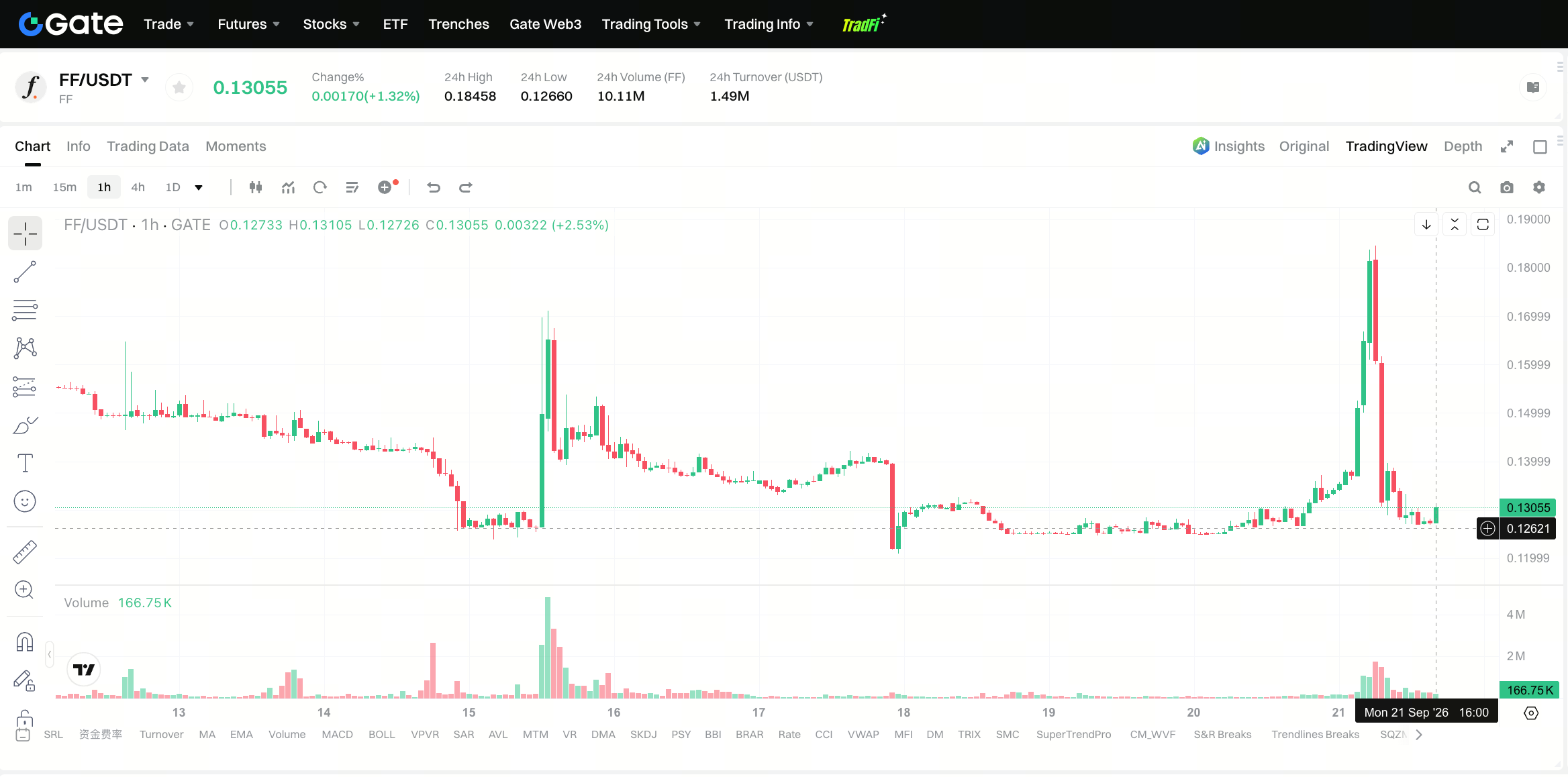
Users who already hold FF or follow the Falcon ecosystem can gain exposure on platforms such as Gate and manage stablecoin holdings with tools like Gate Earn; Falcon Card targets users who want to spend USDf in everyday life.
As Falcon Finance extends its collateral base into areas such as tokenized AI compute and GPU financing, the range of assets that can eventually back a spendable USDf balance may widen further, linking the card to the protocol's broader RWA and AI infrastructure roadmap. Common questions about Falcon Card tend to center on regional availability, fees, and how the USDf conversion works in practice. Because the card is issued against a stablecoin position rather than a bank deposit, the experience is closer to spending a crypto balance than to using a traditional debit card, even though the merchant ultimately receives dollars. Readers evaluating the card should weigh the convenience of spending a yield-bearing asset against the protocol and peg risks that come with any synthetic stablecoin.
Summary
Falcon Card is a crypto payment card launched by Falcon Finance on July 20, 2026, converting USDf to U.S. dollars at a 1:1 ratio for spending across more than 90 countries and regions with no subscription fee. Its defining feature is that spending funds come from the yield-bearing USDf/sUSDf, connecting collateral minting, staking yield, and real-world spending into one loop. Unlike cashback crypto cards, Falcon Card centers on spending yield-bearing assets directly. Using Falcon Card involves risks around regional compliance, USDf peg, merchant acceptance, and tax, and suits users who want stablecoin funds to keep growing until spent.
FAQ
Which countries and regions does Falcon Card support?
Falcon Card supports online and in-person spending at merchants across more than 90 countries and regions, with the exact list subject to Falcon Finance's latest official disclosures. Different jurisdictions impose different rules on crypto payment cards, so some regions may face usage restrictions.
Do I need to pay a subscription fee for Falcon Card?
No. According to Falcon Finance's July 2026 statement, Falcon Card charges no subscription fee. Other fees such as currency conversion, cross-border, and ATM withdrawal fees are subject to the official fee schedule.
Does the USDf in Falcon Card still earn yield?
USDf loaded into Falcon Card for spending no longer earns yield. However, users can stake USDf into sUSDf to keep earning roughly 4-5% APY before spending, and convert USDf into the card only when needed. This earn-then-spend structure is Falcon Card's core feature.
What is the relationship between Falcon Card and fUSD?
Falcon Card spends using USDf, the on-chain synthetic dollar, converted 1:1 to U.S. dollars; fUSD is a regulated digital dollar issued by Anchorage Digital Bank, mainly for institutional settlement. Both belong to Falcon's dual-dollar system, but Falcon Card targets the retail spending scenario that uses USDf.
Do I need to pay taxes when spending with Falcon Card?
In some jurisdictions, spending crypto assets such as USDf may constitute a taxable event requiring the reporting of capital gains or related taxes. Tax treatment varies by region, so consult a local tax professional and file according to local regulations.