Depending on your bank, card issuer, and cryptocurrency platform, a credit card purchase may involve processing fees, foreign transaction charges, or cash advance interest.
Before buying Bitcoin, Ethereum, or other cryptocurrencies with a credit card, it is important to understand how the payment works and what it will actually cost.
This guide answers some of the practical questions to help you evaluate credit card purchases, compare alternative payment methods, and understand how card-based crypto purchases may work on Gate.
Key Takeaways
-
Buying crypto with a credit card is possible through supported exchanges and payment providers, but availability varies by country, card issuer, and provider.
-
Some banks classify cryptocurrency purchases as cash advances, which may trigger additional fees and immediate interest.
-
Credit card processing fees, foreign transaction charges, and exchange-rate spreads can increase the total purchase cost.
-
Debit cards and bank transfers may be more suitable alternatives, depending on fees, processing times, and your financial circumstances.
1. Can You Buy Crypto With a Credit Card?
Some cryptocurrency exchanges and third-party payment providers allow eligible users to purchase cryptocurrency using supported credit cards. However, not every credit card can be used to buy crypto.
Availability depends on several factors:
-
Your country or region
-
The cryptocurrency platform
-
The payment provider
-
Your card issuer
-
The card network
-
The cryptocurrency you want to purchase
-
Applicable identity verification requirements
Visa and Mastercard are commonly supported by cryptocurrency payment providers, but acceptance is not universal. A card that works for ordinary online purchases may still be declined when used to buy cryptocurrency.
Can You Buy Crypto With a Credit Card on Gate?
Gate provides fiat-to-crypto purchase services through supported payment channels.
Depending on your location and the available payment providers, eligible users may see credit or debit card options within the Buy Crypto interface.
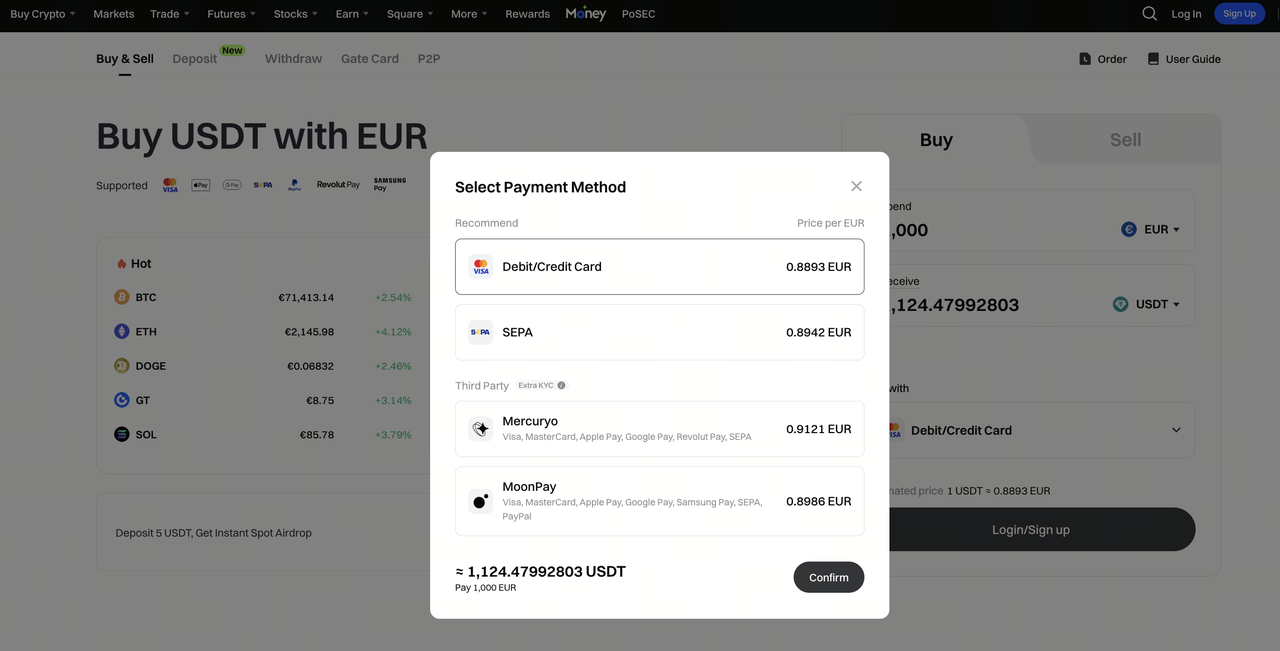
However, the availability of credit card payments should not be assumed for every user.
Before proceeding, check whether your preferred card type, fiat currency, and cryptocurrency are supported in the current checkout interface based on your account set up and KYC-level.
Learn how to buy and sell crypto using your credit card.
2. Does Your Bank Allow Cryptocurrency Purchases?
Your bank or credit card issuer may restrict cryptocurrency purchases even when an exchange supports card payments.
Some issuers allow eligible transactions, while others decline cryptocurrency-related payments or impose additional conditions.
These restrictions can depend on the issuer’s internal risk policies, applicable regulations, and the payment provider involved.
For example, a bank may allow ordinary international online shopping but decline a transaction involving a cryptocurrency payment service.
Why Do Banks Block Crypto Purchases?
Common reasons include banks blocking or limiting crypto transactions due to:
-
Fraud prevention
-
Transaction risk controls
-
Regulatory requirements
-
Restrictions on cryptocurrency-related merchants
-
Cash advance or quasi-cash transaction policies
-
Account-specific spending limits
A declined payment does not necessarily mean that cryptocurrency purchases are prohibited in your country. It may simply reflect your card issuer’s policies.
What Should You Ask Your Bank?
Before purchasing cryptocurrency, consider asking:
-
Are cryptocurrency purchases permitted with my credit card?
-
Are these transactions treated as ordinary purchases or cash advances?
-
Are there transaction limits?
-
Will international or foreign currency fees apply?
What to check: Confirm your issuer’s cryptocurrency transaction policy before initiating a payment.
3. Will Your Crypto Purchase Count as a Cash Advance?
This is one of the most important questions to ask before buying crypto with a credit card.
Some credit card issuers classify cryptocurrency purchases as cash advances or cash-equivalent transactions rather than ordinary retail purchases.
The classification can significantly affect the total cost. Some issuers treat crypto purchases as cash advances instead of regular purchases.
What Happens When a Crypto Purchase Is Treated as a Cash Advance?
Depending on the card agreement, a cash advance may involve:
-
An additional transaction fee
-
A separate interest rate
-
Interest beginning immediately
-
No ordinary purchase grace period
-
Different transaction limits
-
No eligibility for credit card rewards
The exact treatment depends on your issuer and card terms.
Example: A $1,000 Crypto Purchase
Suppose you use a credit card to buy $1,000 worth of cryptocurrency.
Your issuer treats the transaction as a cash advance and applies:
The hypothetical costs would be:
| Cost Component |
Amount |
| Card transaction amount |
$1,000 |
| Cash advance fee (3%) |
$30 |
| Interest over 30 days at 28% APR |
Approximately $23 |
| Additional card-related cost |
Approximately $53 |
Illustrative calculation: Interest is estimated using simple daily interest on the $1,000 advance. Actual charges depend on the issuer’s calculation method, posting dates, and repayment terms. Platform fees are excluded.
In this example, the additional card-related cost is approximately $53 before considering any cryptocurrency purchase fees.
If the same transaction were treated as an ordinary purchase and the full statement balance were paid within an applicable grace period, interest charges might be avoided.
Where to verify the fee charges: Users should check the credit card issuer's terms and conditions. Search for keywords like "cash advance, cash equivalent, cryptocurrency, and digital assets." Alternatively, call for bank customer support to verify if cryptocurrency puchases are classified as cash advances or ordinary retail transactions.
4. How Much Does Buying Crypto With a Credit Card Actually Cost?
The total cost of buying cryptocurrency with a credit card may include more than the fee displayed by the exchange. Depending on the payment arrangement, users may encounter several types of charges.
Common Fees
| Fee Type |
What It Means |
| Payment provider fee |
A charge applied by the service processing the purchase, sometimes shown as a service fee |
| Exchange or platform fee |
A fee charged by the platform, where applicable |
| Exchange-rate spread |
The difference between the quoted purchase price and a reference market price |
| Cash advance fee |
A charge applied by the card issuer if the transaction is classified as a cash advance |
| Foreign transaction fee |
A possible charge for international or foreign currency transactions |
| Credit card interest |
Interest charged when applicable under the card agreement |
Not every purchase involves all these charges.
At checkout, possible charges may include the exchange rate, payment provider fee, service fee, and final crypto amount.
Some fees may already be incorporated into the quoted exchange rate or payment provider’s total price, and providers with transparent fees show the exchange rate, service fee, and final amount before confirmation so there are no hidden charges.
Foreign transaction fees may add about 3% for international purchases, depending on the card issuer.
Users should avoid adding assumed fees that may already be included in the checkout quote.
Example: Comparing Two Payment Methods
Suppose you want to spend $500 buying BTC.
|
Credit Card |
Bank Transfer |
| Amount charged |
$500 |
$500 |
| Total provider fees and pricing costs |
$20 |
$5 |
| Value of crypto received |
$480 |
$495 |
| Additional issuer fees |
Possible |
Depends on bank |
| Credit card interest |
Possible |
Not applicable |
These figures are hypothetical and do not represent Gate’s current fees or any specific payment provider’s pricing.
The bank transfer provides $15 more cryptocurrency in this example. In practice, other methods may result in a lower total cost than a card payment even if they take longer to clear.
However, actual costs depend on the payment method, provider, currency, and prevailing quote, and bank transfers may be more cost effective for larger or repeated purchases while credit cards often come with higher fees for its convenience.
Always check the final price shown by the payment gateway before finalizing the payment as the figures shown are typically the live prices that you actually going to pay.
5. Is Buying Crypto With a Credit Card Safe?
Buying cryptocurrency with a credit card involves both payment security and cryptocurrency-specific risks. These should be evaluated separately.
Payment Security
Legitimate payment providers typically uses security measures such as encrypted connections, card authentication, and fraud monitoring.
Some transactions may require additional verification through the card issuer.
However, these controls do not eliminate every risk.
Fraudsters may create fake cryptocurrency websites or impersonate legitimate exchanges to collect payment information.
Learn how to protect yourself from crypto scams.
Does Credit Card Chargeback Protection Apply to Crypto?
Credit cards may provide fraud protection and dispute rights for certain unauthorized or incorrectly processed transactions. However, these protections should not be confused with insurance against cryptocurrency investment losses.
For example, credit card protections may help with unauthorized charges, but they generally do not cover market losses or authorized transfers to scammers. Card issuers retain the right to assess disputes and determine eligibility for refunds or chargebacks in accordance with their terms, applicable card network rules, and local regulations.
- Scenario A: Unauthorized card transaction
Someone uses your card without permission to make a purchase. Depending on applicable law and issuer rules, you may have grounds to dispute the charge.
- Scenario B: Authorized crypto purchase followed by a price decline
You intentionally buy BTC, but its market value subsequently falls. A chargeback generally cannot be used simply because the investment lost value.
- Scenario C: You buy crypto and voluntarily send it to a scammer
You authorize the cryptocurrency purchase and then transfer the assets to a fraudulent wallet. Recovering the funds may be difficult, and card dispute protections may not cover the subsequent cryptocurrency transfer.
How Can You Reduce Security Risks?
Use official exchange websites and applications. Avoid payment links received through unsolicited messages. Never disclose your credit card verification codes, exchange passwords, or wallet recovery phrases to unknown individuals. Official platforms will never ask you for passwords or private keys for verification.
What to check: Verify the platform and understand the difference between card payment protection and cryptocurrency asset protection.
6. Can You Afford to Repay Your Credit Card Balance?
Buying cryptocurrency with a credit card can introduces an additional financial obligation.
Unlike purchasing crypto with a debit card where money already available in your bank account, a credit card transaction may create debt that must be repaid.
This matters because cryptocurrency prices can fluctuate significantly.
For example, buying BTC with borrowed money can induce additional financial risks.
Suppose you purchase $1,000 worth of Bitcoin using a credit card. One month later, Bitcoin’s price falls by 15%. Your cryptocurrency is now worth approximately $850, assuming no other changes.
However, you may still owe the original card balance, applicable fees, and any interest.
If you cannot repay the balance, interest charges may continue accumulating even while your cryptocurrency investment remains below its purchase value.
Can Credit Card Purchases Affect Your Credit Score?
In jurisdictions where credit utilization contributes to credit scoring, a larger outstanding card balance may affect your credit profile.
The impact depends on the scoring system, reported balances, credit limits, and other factors. There is no universal credit utilization threshold that guarantees a particular score change.
Disclaimer: Credit scoring methods vary by country, credit bureau, and financial institution. Consult your card issuer or local credit bureau to understand how credit card transactions may affect your credit score.
Questions to Ask Yourself
Before buying cryptocurrency with credit, consider:
-
Can I repay the full balance without selling the cryptocurrency?
-
Does using credit for this purchase fit my financial goals and risk tolerance?
-
Will the purchase affect my ability to pay essential expenses?
-
What happens if the cryptocurrency loses substantial value?
-
Will interest charges apply?
-
Would using available funds through another payment method be more appropriate?
-
Have I done my own research before deciding to purchase Bitcoin or other cryptocurrency with borrowed money?
What to check: Evaluate repayment obligations independently of your expectations about cryptocurrency prices.
7. Which Cryptocurrencies Can You Buy With a Credit Card?
The cryptocurrencies available for card purchases depend on the exchange and payment provider.
Bitcoin, Ethereum, and USDC are common digital assets supported by fiat-to-crypto services.
Some providers also support stablecoins and selected altcoins.
However, a cryptocurrency being listed for trading on an exchange does not necessarily mean it can be purchased directly with a credit card.
Direct Card Purchase vs. Spot Trading
Direct card purchase uses a supported payment provider to exchange fiat currency for cryptocurrency. The available assets depend on the provider and purchase route.
Spot trading let users to trade one cryptocurrency or supported asset for another through an exchange’s spot market.
For example, a user may purchase a supported cryptocurrency through a fiat on-ramp and subsequently exchange it for another asset on the spot market. This involves separate transactions and incurred fees.
Can You Buy USDT or Other Stablecoins With a Credit Card?
Some fiat-to-crypto providers support stablecoin purchases. However, availability varies by jurisdiction, provider, and asset.
Always confirm whether your preferred cryptocurrency is available for direct card purchase or requires a separate spot trade.
Learn how to buy USDT via Gate.
8. How Do You Buy Crypto With a Credit Card on Gate?
Gate provides fiat-to-crypto purchase options through supported payment channels.
The precise process may vary by country, payment provider, and the current platform interface.
The following steps describe a general card-purchase workflow.
- Step 1: Create or Sign In to Your Gate Account
Access Gate through its official website or application. Then create an account if you do not already have one. Complete any required identity verification before proceeding.
Mandatory Know Your Customer (KYC) verification is standard on a regulated platform, with exact requirements varying by service and jurisdiction.
Navigate to the Gate's Buy Crypto button. Review the available assets to purchase and the payment methods. Depending on your location, you may see card-based payment options or other supported fiat purchase channels.
- Step 3: Select Your Fiat Currency and Cryptocurrency
Choose the fiat currency you want use to buy the cryptocurrency. The available combinations depend on the payment provider.
- Step 4: Review Available Payment Options
If credit card purchases are supported, review the available provider and payment details. Check the estimated amount of cryptocurrency you will receive as you compare your preferred payment method and provider details before continuing.
Pay attention to any disclosed fees, exchange rates, limits, and payment conditions.
- Step 5: Complete the Payment
Follow the payment provider’s instructions when using a debit or credit card. Some services let you complete the purchase in just a few steps through an on-screen card checkout. You may be asked to enter card details or complete additional verification.
Use only the official checkout process.
- Step 6: Confirm Receipt of Your Cryptocurrency
After the payment is processed, review the transaction status and the destination account indicated by the service, as the purchased crypto may be sent there or, for some services, to your own wallet after processing.
Processing and delivery times vary, delays may occur for withdrawal holds on newly purchased cryptocurrency to prevent fraud. If the purchase is delayed, check the order status and contact the Gate official support channel for clarification.
9. How Long Does It Take to Receive Crypto After Paying With a Credit Card?
Card payments can be relatively fast, but payment approval and cryptocurrency delivery are not necessarily the same event.
Several stages may be involved.
-
Card Authorization: The card issuer evaluates the transaction. It may approve, decline, or request additional authentication.
-
Payment Provider Processing: The payment provider processes the order and performs any required checks. For first-time users, identity verification may take a few minutes before the order can proceed. Additional verification may be necessary in some circumstances.
-
Cryptocurrency Delivery: Once the purchase is completed, most purchases are completed within minutes after payment approval, although cryptocurrency delivery still depends on the provider’s settlement process. The time required can vary.
What Can Delay a Crypto Purchase?
Potential causes include:
-
Card issuer restrictions
-
Additional identity verification
-
Payment provider compliance checks
-
Transaction limits
-
Incorrect payment information
-
Technical or operational delays
-
A first purchase may trigger extra checks or short fraud-prevention withdrawal holds with some providers
Some transactions may complete quickly, while others require additional processing.
Users should not assume that every card purchase will settle within a fixed number of minutes.
10. Is a Credit Card Better Than a Debit Card or Bank Transfer?
The best payment method depends on your priorities, available services, and financial circumstances.
Credit cards may offer convenience, but debit cards and bank transfers can avoid some credit-related costs.
| Factor |
Credit Card |
Debit Card |
Bank Transfer |
| Uses borrowed funds |
Yes |
No |
No |
| Cash advance risk |
Possible |
Generally not applicable |
Not applicable |
| Interest charges |
Possible |
Generally none |
Generally none |
| Processing fees |
Often higher due to transaction fees |
Provider-dependent |
Bank/provider-dependent |
| Payment speed |
Often fast |
Often fast |
Depends on transfer rail |
| Issuer restrictions |
Possible |
Possible |
Possible |
| Availability |
Region/provider-dependent |
Region/provider-dependent |
Region/provider-dependent |
| Best suited for |
Eligible users prioritizing convenience |
Users spending available funds |
Users prioritizing a more cost effective option for frequent or larger purchases |
When Might a Credit Card Be Suitable?
A credit card may be worth considering when:
-
Your issuer permits cryptocurrency purchases.
-
The transaction is not subject to unexpected cash advance charges.
-
You understand the total fees.
-
You can repay the balance without relying on investment gains.
-
The payment method is supported by your chosen provider.
-
It may suit first time buyers who prioritize speed and convenience for smaller purchases.
-
You’ve decided that entering the crypto market this way matches your financial goals and risk tolerance.
When Might a Debit Card Be Better?
A debit card uses available account funds rather than creating a credit card balance.
This can avoid credit card interest and cash advance charges.
However, debit card purchases may still involve processing fees, issuer restrictions, and exchange-rate spreads.
When Might a Bank Transfer Be Better?
Bank transfers may offer more competitive pricing for certain purchase amounts and providers.
However, the cost, exchange rate and processing time depend on the transfer method.
For example, instant domestic payment systems may operate differently from standard international bank transfers.
Users should compare the available options rather than assuming that all bank transfers are cheaper or slower. They are often a more cost effective option than credit cards, especially when card purchases come with higher fees.
What About Apple Pay and Google Pay?
Some cryptocurrency payment providers support digital wallet payments.
However, availability depends on the provider and region.
Apple Pay and Google Pay are payment interfaces that use an underlying supported payment card.
They do not automatically eliminate card issuer restrictions, cash advance treatment, or applicable fees.
What to check: Compare the actual purchase quotes and funding conditions across the payment methods available to you.
Conclusion
Buying cryptocurrency with a credit card can be convenient, but the total cost and financial implications deserve careful consideration.
Before making a purchase, confirm that your issuer permits cryptocurrency transactions and determine whether the payment will be classified as an ordinary purchase or cash advance.
Review all applicable fees, understand potential interest charges, and evaluate whether you can repay the balance independently of cryptocurrency price movements.
Before buying crypto with a credit card, compare the final amount you will pay, the cryptocurrency you will receive, and the repayment obligations you may incur.
FAQ
Can You Buy USDT With a Credit Card?
Some cryptocurrency payment providers support stablecoin purchases, including USDT. Availability varies by provider and jurisdiction.
Is It Better to Buy Crypto With a Debit Card?
A debit card may avoid credit card interest and cash advance charges.
However, users should still compare payment fees and exchange rates.
Can You Use Apple Pay to Buy Crypto?
Some payment providers support Apple Pay for eligible cryptocurrency purchases.
The underlying card’s terms and issuer restrictions still apply.
Can You Get a Credit Card Refund if Bitcoin Falls in Price?
Generally, no. A cryptocurrency investment losing value is not normally grounds for reversing an authorized card purchase.
How Fast Can You Buy Crypto With a Credit Card?
Some purchases may complete in a few minutes, especially for verified users, but processing times still depend on card approval, payment provider checks, and cryptocurrency delivery procedures. First-time users may take longer because identity checks can add extra verification time.