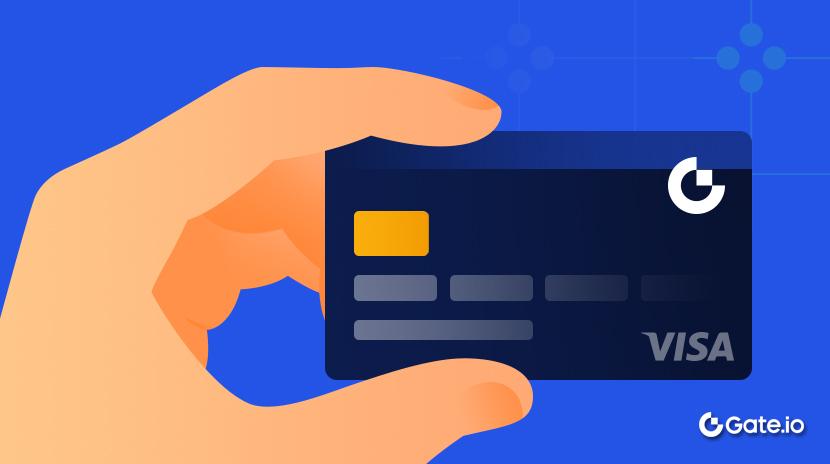
That difference matters if you are choosing between paying with crypto like a regular card purchase and using crypto payment infrastructure for checkout, payouts, or account management. This comparison is aimed at both personal crypto users and merchants or institutional teams, and it breaks down the areas that usually decide the choice: purpose and use cases, fees, rewards, regional variations, payment methods, merchant tools, security, compliance, and which option fits your needs.
Key Takeaways
-
Gate Card is best suited to eligible individuals who want to spend supported digital assets at ordinary merchants.
-
Gate Pay is broader payment infrastructure for crypto transfers, merchant checkout, QR and address payments, payouts, and institutional account management.
-
Gate Card is not one identical product worldwide. Card network, supported assets, fees, funding model, and eligibility vary by region.
-
Gate US launched a separate Visa prepaid debit card in July 2026 for eligible U.S. users, while Gate’s European card offerings can use different structures and networks.
Gate Card vs Gate Pay: Quick Comparison of Innovative Payment Solutions
| Feature |
Gate Card |
Gate Pay |
| Main user |
Individual consumer |
Consumers, merchants, institutions |
| Primary purpose |
Spend crypto through card networks |
Send, receive and accept crypto payments |
| Typical use |
Shopping, travel, online purchases, ATM access |
Checkout, QR payments, payouts, merchant settlement |
| Interface |
Virtual/physical card |
App, API, QR, payment links, checkout |
| Merchant integration required |
No |
Yes for merchant use |
| Rewards |
Up to 8% cashback on eligible purchases |
No equivalent consumer cashback structure |
| Settlement |
Depends on regional card program |
Supported crypto settlement and conversion flows |
| Business tools |
Limited |
Merchant dashboard, refunds, payouts, APIs, institutional accounts |
The simplest rule is: Gate Card helps you spend your own digital assets; Gate Pay helps you move or accept digital-asset payments more broadly.
What Is Gate Card and How Does It Compare to Prepaid Cards?
Gate Card is Gate’s crypto-enabled card product for eligible users who want to use digital assets for everyday purchases.
Gate’s main Card page currently describes the product as allowing users to spend digital assets without manually converting them before each purchase. Major assets displayed for its Instant Spend experience include USDT, BTC, ETH, and GT. Gate also advertises instant virtual-card availability and up to 8% cashback on eligible purchases.
However, Gate Card should not be described as one universal “Visa Platinum debit card.” Different regional programs use different networks and funding structures.
For example, Gate’s European Gate Card Midnight is a debit card linked to the user’s Gate account, with support for USDC, BTC, and ETH. It can be used at more than 110 million Mastercard-accepting merchants and supports Apple Pay and Google Pay.
Gate US uses a separate structure. The U.S. Gate card launched in July, 2026 in collaboration with Visa, Stripe, and Bridge. It is issued by Lead Bank and allows eligible users to spend supported stablecoins such as USDC through Visa’s merchant network, with conversion occurring during payment.
This regional variation is important when discussing fees, networks, supported currencies, and spending limits.
How Gate Card Works
The general card flow is straightforward: the user holds eligible assets or a funded card balance, makes a card purchase, and Gate’s card infrastructure converts or applies the relevant balance so the merchant receives payment through the conventional card network.
Depending on the card program, Gate supports different spending modes. The current global Gate Card experience includes an Instant Spend option that can draw from eligible account balances, while some card products use a prepaid model.
For users, the benefit is convenience. Instead of selling BTC or USDT manually, withdrawing fiat to a bank account, and then spending from a bank debit card, the card can handle the conversion within the payment flow.
That convenience can still carry costs. Crypto conversion fees, FX fees, ATM fees, replacement costs, or other card charges depend on the specific program, so users should check their own Gate Card fee schedule rather than apply one rate globally.
Gate Card Rewards in 2026
Gate introduced an updated points-based cashback system in July 2026.
The current global cashback structure runs from T0 through T5:
| Tier |
Cashback |
Monthly Equivalent Cap |
| T0 |
1% |
5 USDT |
| T1 |
1% |
50 USDT |
| T2 |
2% |
100 USDT |
| T3 |
3% |
150 USDT |
| T4 |
5% |
250 USDT |
| T5 |
8% |
400 USDT |
Tier eligibility can depend on Gate VIP level or monthly card spending, with the higher eligible benefit applied under the current program.
The rewards are issued as points rather than direct fiat cashback. Gate has also expanded the types of digital assets that can be redeemed through the points program.
This is one of the clearest differences between Gate Card and Gate Pay: Gate Card is designed partly as a consumer rewards product, while Gate Pay is primarily payment infrastructure.
What Is Gate Pay?
Gate Pay is one of Gate’s broader payment solutions for both users and businesses.
It launched in November 2022 as a crypto-payment product supporting QR and address payments and has since expanded substantially.
For individual users, the Gate Pay App currently supports payment-account balances, transfers to other Gate users, QR scanning, merchant payments, local payment entrances in supported regions, and direct crypto transfers through QR codes or wallet addresses.
For merchants and institutions, Gate Pay provides a much broader set of tools. These include:
-
merchant checkout;
-
QR-code payments;
-
on-chain address payments;
-
payment links and embeddable payment buttons;
-
refunds;
-
payouts;
-
instant conversion;
-
fiat deposit support for verified merchants;
-
institutional and sub-account structures;
-
API-based payment and fund management.
Supported Gate Pay transactions settle instantly without the geographic restrictions and foreign-exchange friction common in card-based international payments.
This makes Gate Pay closer to a crypto-payment gateway and financial infrastructure layer than a card product.
How Gate Pay Checkout Works
Gate Pay merchants can create orders and send customers to a hosted Gate Pay checkout page.
The current checkout system supports both QR-code payment and dynamic on-chain address payment. Customers can either use the Gate App to scan and pay or transfer supported crypto from an external wallet to the provided address.
Gate Pay’s current documentation lists more than 20 supported assets for normal payments and separate supported assets and networks for on-chain address payments. These currently include assets such as BTC, USDT, ETH, GT, DOGE, XRP, LTC and others, with address-payment support across networks including Ethereum, Polygon, Arbitrum, BNB Smart Chain, Solana, Tron, and Bitcoin.
That makes Gate Pay useful for merchants who want to accept crypto from both Gate users and customers using external wallets without depending on other cards or international card rails.
Does Gate Pay Accept Credit Cards?
The original article says Gate Pay supports credit and prepaid cards alongside crypto. That is too broad.
Gate Pay’s current core merchant checkout documentation focuses on crypto payments through Gate accounts, QR codes, and blockchain addresses. Its documentation also allows merchants to denominate orders in fiat currencies, but if a fiat order currency is used, Gate Pay converts that value into the corresponding crypto amount at the real-time exchange rate when the order is created.
That is different from traditional card acquiring.
Gate has other fiat and payment products elsewhere in its ecosystem, but Gate Pay itself should not be described as a general Visa/Mastercard card-processing gateway unless a specific integration explicitly supports that function.
Fiat-Denominated Orders vs Fiat and Digital Assets Settlement
Another important distinction is between pricing an order in fiat and settling a payment in fiat.
Gate Pay allows merchants to create an order using a fiat-denominated amount. The system then determines the equivalent crypto amount using the applicable real-time rate.
Gate also launched real-time conversion functionality in late 2025. This allows a customer to pay with one supported crypto asset while the merchant receives the designated settlement asset through automatic conversion.
In addition, Gate Pay now provides fiat-deposit functionality for verified merchants, and its merchant tools have continued expanding into fiat-related treasury functions. Availability depends on account type, supported region, compliance status, and current merchant functionality.
Gate Card vs Gate Pay: Main Use Cases
Gate Card is mainly useful when the user wants crypto to behave more like ordinary spending money.
Typical examples include:
-
paying for groceries or retail purchases;
-
online shopping;
-
subscriptions;
-
travel spending;
-
eligible ATM withdrawals;
-
spending supported digital assets through digital wallets like Apple Pay and Google Pay, where supported, including through mobile applications.
Gate Pay is more useful when the payment itself needs to remain within crypto infrastructure.
Typical uses include:
-
accepting crypto on an e-commerce site;
-
adding a crypto checkout button;
-
receiving QR-code payments;
-
accepting on-chain payments from external wallets;
-
sending payouts to users or creators;
-
managing merchant or institutional sub-accounts;
-
converting received assets into a preferred settlement crypto;
-
operating crypto payments through an API.
A business could use both, but the products remain structurally different.
Gate Pay for Businesses and Institutions
Merchant onboarding currently requires a Gate account and KYB verification before the merchant account and payment application are configured, which makes Gate Pay more relevant for businesses, institutions, and different segments that need payment solutions servicing rather than consumer card spending.
Once approved, merchants can generate API credentials and integrate Gate Pay using its documented APIs and hosted payment tools.
Gate Pay also introduced institutional accounts, allowing institutions to create and manage customer-level accounts under a unified structure. Current API functionality includes finance operations, order placement, payouts, transfers, direct debit from users to institutions, refunds, instant conversion, and OTC withdrawal functions.
This makes Gate Pay more relevant than Gate Card for platforms, creators, marketplaces, fintech businesses, and other companies that need programmable payment infrastructure, including tailored solutions for corporate clients and, where relevant, high net worth customers with financing and investment needs, corporate advisory, or strategy management solutions outside the basic consumer-payment use case.
Gate Card vs Gate Pay: Fees and Economics
The two products also have very different economics.
Gate Card fees depend on the particular regional card program. The global Gate Card does not have any annual fee, making them effectively free on that point, but users should still confirm the applicable schedule for their region. Gate EU and Gate US charges crypto conversion or FX fees differently likewise for the cashback rewards can be different as well.
Gate Pay's merchant costs can depend on payment type, settlement arrangement, integration, account agreement, network used, conversion, and other commercial terms.
The better comparison is therefore:
-
Gate Card: user-facing spending costs and rewards.
-
Gate Pay: merchant payment-processing, conversion, settlement, and integration economics.
Businesses should evaluate the total cost of the specific Gate Pay implementation rather than compare an old illustrative gateway fee against standard card interchange.
Security and Compliance
Both products operate inside Gate’s broader compliance and account infrastructure, but the specific protections differ.
Gate Card security can include card-network protections, issuer controls, card freezing, transaction authentication, and digital-wallet tokenization depending on the card program, helping keep payments more secure.
Gate Pay merchant integrations use HTTPS with TLS 1.2 or higher and HMAC-SHA512 signature verification for API requests and responses.
Address-payment transactions also depend on blockchain confirmation. Once an on-chain transaction is completed, the usual blockchain irreversibility considerations apply.
Merchant onboarding requires KYB, while consumer eligibility for Gate Card depends on identity verification, residency, issuer approval, local compliance rules, and supporting data.
Regional availability should therefore always be checked before applying or integrating. Depending on the program, card application can require KYC verification at Level 2 and proof of address issued within the last 3 months. Gate Card application generally does not require a credit check.
Is Gate Card Available in the United States?
Yes. Gate Card is available in 24 countries as of August 2026, though exact eligibility still depends on the specific country and program.
Gate US launched a Visa prepaid debit card for eligible U.S. users on July 10, 2026. It is issued by Lead Bank and uses infrastructure from Visa, Stripe, and Bridge. Supported stablecoins such as USDC can be converted during payment.
Gate US operates separately from Gate’s other regional card products, so its fees, limits, and supported assets should not be assumed to match global or European Gate Cards.
Which One Should You Choose?
Choose Gate Card if your main goal is to spend your own crypto through ordinary merchant infrastructure and to earn cashback on your everyday spendings.
It is the more natural option for personal shopping, travel, subscriptions, card-not-present purchases, and other everyday spending.
Choose Gate Pay if you need to accept, send, or manage crypto payments rather than simply spend your own holdings.
It is better suited to merchants, online platforms, SaaS products, Web3 companies, creators, marketplaces, or institutional payment operations.
Gate Pay can also make sense for individual Gate users who want to send funds, scan merchant QR codes, or use the Gate payment account rather than a card.
Can You Use Gate Card and Gate Pay Together?
Yes, if the use cases justify it. A crypto-native business could integrate Gate Pay into its website to accept customer payments while a founder or employee separately uses an eligible Gate Card for business travel or operating purchases.
Similarly, an individual might use Gate Pay for crypto transfers and QR-based payments while using Gate Card at merchants that rely on Visa or Mastercard infrastructure.
They complement each other because one extends crypto into the card network, while the other creates a native crypto-payment layer.
Conclusion
Gate Card and Gate Pay both make digital assets more useful for payments, but they address different needs. Gate Card connects crypto balances to traditional card-payment infrastructure, making it more suitable for everyday consumer spending. Gate Pay is a broader crypto-payment platform that supports transfers, merchant checkout, QR and address payments, payouts, conversion, and institutional account management.
For individuals, Gate Card is usually the more relevant choice when the goal is to spend crypto at ordinary merchants. For businesses and platforms, Gate Pay provides the deeper integration layer. Users or companies operating heavily in digital assets may benefit from both, using Gate Pay to move or receive crypto and Gate Card to extend those balances into everyday card spending.
FAQ
Is Gate Card available in the U.S.?
Yes. Gate US launched its prepaid Visa card to eligible users in supported U.S. jurisdictions.
How much cashback does Gate Card offer?
Gate’s current global rewards program offers between 1% and 8% cashback depending on card tier, with monthly caps.
Can Gate Pay accept payments from external crypto wallets?
Yes. Gate Pay’s Address Payment functionality lets customers pay supported merchants from external wallets using supported blockchain networks.
Does Gate Pay support QR-code payments?
Yes. Merchants can display Gate Pay QR codes that users scan through the Gate App to complete supported payments.
Can Gate Pay price products in fiat?
Yes. Gate Pay allows orders to be denominated in fiat value, with the equivalent crypto amount calculated using the current exchange rate when the order is created.
Does Gate Pay process normal credit-card payments?
Its core documented checkout focuses on Gate Pay crypto balances, QR payments, and on-chain address payments. It should not be treated as a generic credit-card acquiring gateway.